





Schedule
Team Canada (Men)
IIHF World Junior Championship | Dec. 26, 2026 - Jan. 5, 2027
IIHF U18 Men’s World Championship | Apr. 22 - May 2, 2027
IIHF World Championship | May 14-30, 2027
Hlinka Gretzy Cup | Aug. 3-8, 2026
U20 Summer Showcase | July 26 - Aug. 1, 2026
U17 Development Camp | July. 19-21, 2026
2026 Olympic Winter Games | Feb. 11-22, 2026

Search
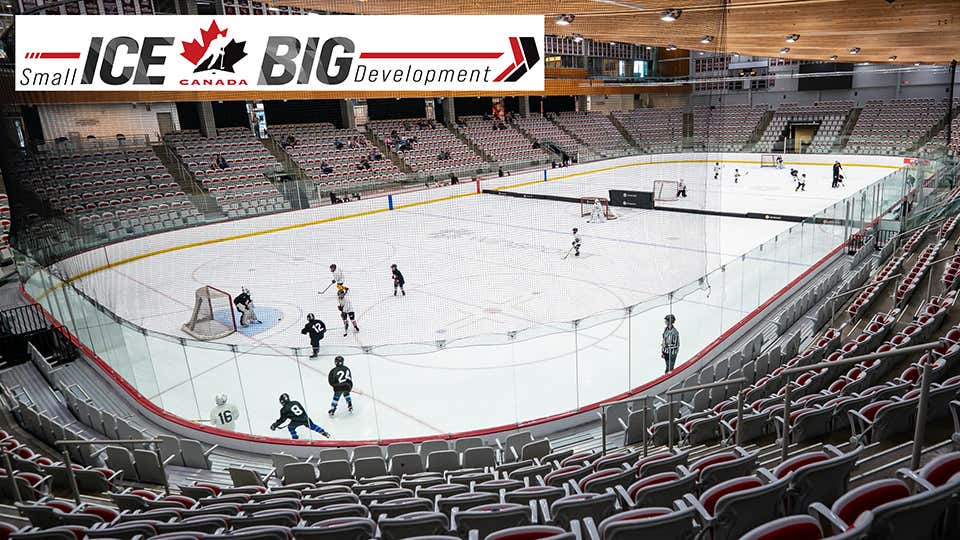
Best practices on small ice
From working on skating to getting every player involved on the ice, check out how to develop players using small-area games or half-ice hockey
|
September 15, 2026
|

()
A new season has begun at the rink!
At all levels—especially U9—hockey is all about learning, confidence, fun and long-term development. Here are a few tips for best practices as you put together your coaching plan for the upcoming season.
Use small-area games
Based on recent statistics, approximately 82 per cent of the game is played in either the offensive or defensive zone. When the puck is in one zone, typically all 10 players will be within the blue line.
Maximize your player’s development starting at a young age by using small-ice hockey and small-area games. Playing in a reduced space with less players instead of 5-on-5 on full ice will increase your player’s engagement, promote faster and improved decision-making, provide more chances to practice skills from real-game situations and foster a fun atmosphere on the ice.
Small-ice hockey means more meaningful repetitions in every practice, consistent opportunities to develop skills and higher activity levels with less standing and waiting. It also promotes a learning-focused environment with the chance to build stronger habits through repetition and feedback.
Get every player more involved
Small-area games is a fantastic way to ensure every player on your team is more involved during your practices.
Compared to full-ice hockey, cross-and half-ice play results in:
• 3× more puck touches • 2.5× more pass attempts and completions • 4× more shots on goal • 2× more ice time • 4× more puck battles and recoveries
By incorporating small-area games into your practices, every player will have more chances to learn, compete and develop because of the increased involvement in game play.
Focus on skating
Skating is a key component in hockey. Rather than focusing on straight-line speed, coaches should look for opportunities in practice to focus agility, balance and acceleration.
Using a smaller ice surface for drills will force players to focus on turns, edge control and quick stops. It will also result in short but more intense speed bursts during practice. For more ideas on what drills you can use in small areas, download the Hockey Canada Network app.
International best practice
Did you know that the world’s top hockey nations—including Canada’s national teams—use reduced playing surfaces and small-area games in their training? Our national teams incorporate small-area games frequently into their practices to promote higher intensity, simulate real-game scenarios and develop better habits on the ice.
International best practice highlights a common philosophy: build strong foundations first, develop skills under pressure and progress to full-ice systems as athletes mature. Hockey Canada’s Long-Term Player Development (LTPD) framework emphasizes that athletes develop best when training environments match their age, stage of development and physical capabilities. Cross-ice hockey, half-ice hockey and small-area games are designed to help support this strategy.
There are practice plans available through the Hockey Canada Network or Drill Hub as part of the Hockey Canada Skills Manual series, mapping out easy-to-follow ice sessions.
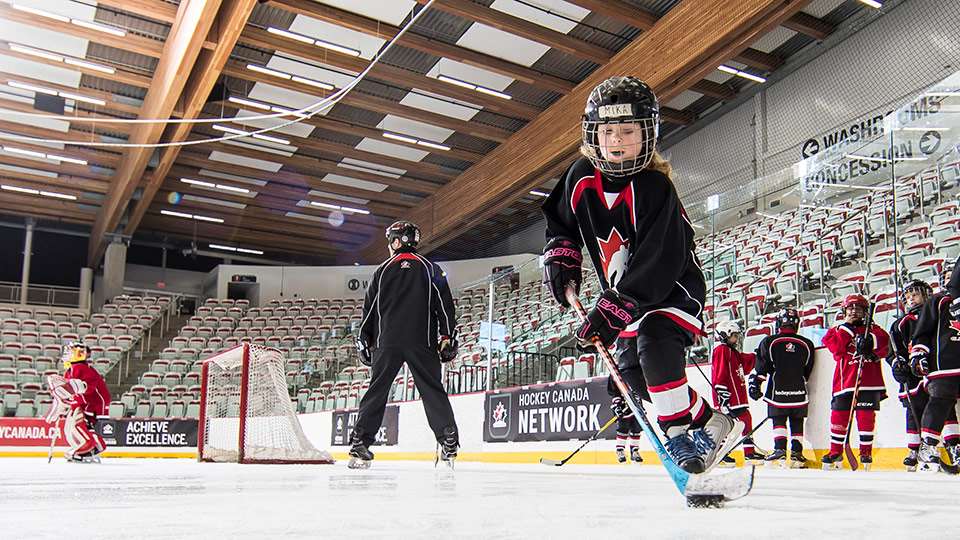
Hockey Canada gears up for 2019-20 season
Highlights of the upcoming season include transition to Novice half-ice games
NR.061.19
|
September 12, 2019
|
()
CALGARY, Alta. – The beginning of a new season is here as kids, parents, officials and volunteers head back to the rink for the 2019-20 hockey season. Hockey Canada is looking forward to the upcoming season with many opportunities for new and returning players.
With athletes of all ages hitting the ice over the next few weeks, there are several exciting opportunities for skaters, parents and officials alike. This includes programs for age groups ranging from Timbits Initiation to adult rec programs, and development opportunities for coaches and officials.
“Starting a fresh hockey season is always exciting, no matter what capacity you’re experiencing it in,” said Tom Renney, chief executive officer of Hockey Canada. “From experience, having a new season to focus on is wonderful, whether it be as a player, a coach or a parent. There are so many opportunities out there where we can come together and share the love for the sport.”
Through the season Hockey Canada provides players, parents and coaches with tools to help improve and elevate their game, starting with tips for evaluations, resources like Tom’s Talks, the Hockey Canada Network and Hockey Canada Skills Academies across the country. These resources are created with the athletes’ best interest in mind and makes it easier on coaches and parents to help create an atmosphere of fun and learning for athletes of all ages.
Novice hockey moves to half-ice
With the new season, minor hockey associations across the country are embracing the move to half-ice hockey in their Novice programs. When the change was introduced in 2018, many regions made the switch for the 2018-19 season and experienced first-hand how it helps the development of Novice-aged players.
“We’re tremendously excited to see players across the country experience the benefits of half-ice Novice hockey,” said Renney. “The focus is about making hockey more for these kids. They get more puck touches, more scoring chances and, ultimately, they have more fun.”
The program, which is now mandatory across Canada, offers Novice-aged kids a better chance at development, while increasing the fun they have while on-ice. Half-ice hockey has proven to provide kids more puck-touches, more passing and better development in tight spaces.
For more information on Hockey Canada, or Hockey Canada’s programs, please visit HockeyCanada.ca, and for more information on half-ice hockey, visit HockeyCanada.ca/Novice.
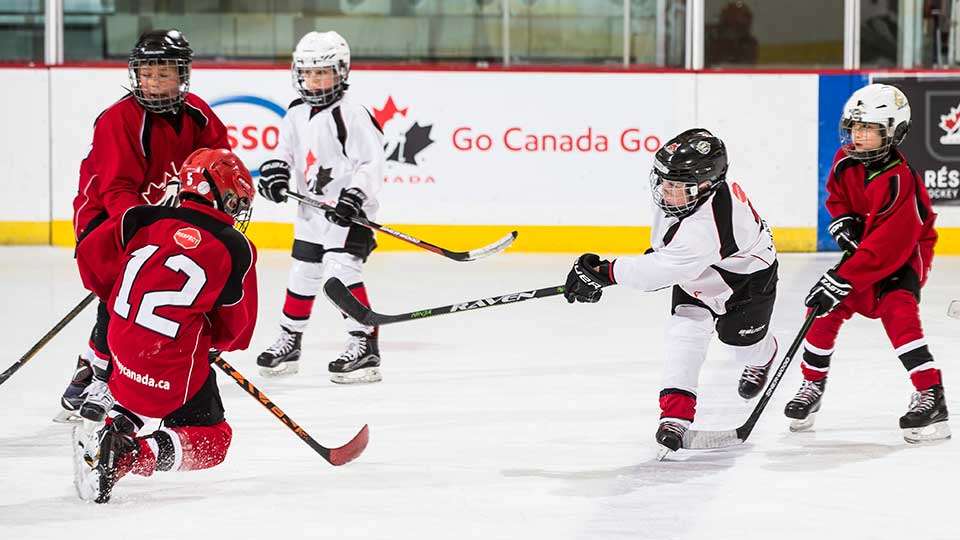
Half-ice rewards
The Novice initiative enriches player development, and Canadian hockey parents are seeing the benefits
|
August 28, 2019
|
()
Take a second, visit YouTube and check out the top 10 plays of Sidney Crosby’s career.
You’re all but guaranteed to see No. 87's one-handed backhand beauty against the Buffalo Sabres, his puck-handling clinic against Jason Spezza, his falling-down goal against the Montreal Canadiens and his stick-handling dismantlement of the Edmonton Oilers.
There’s a common ingredient between these four moments: The two-time Olympic gold medallist and IIHF Triple Gold Club member got the job done with barely any room to operate.
“You have to be able to make plays in pretty small areas,” Crosby says. “The more you practice in small spaces, the better off you are.”
With the mandate that Novice games must be played on half-ice starting this fall – many member branches have already adopted the format over the past several seasons – seven- and eight-year-old players will play in games that will align with the small-area nature of professional hockey.
Jesse Joslin has seen the benefits of dividing the playing surface. His son Sebastian, born in 2010, participated in cross-ice hockey at the Initiation level and half-ice hockey as a Novice player in the Semiahmoo Minor Hockey Association. The hockey dad admits he was apprehensive because the benefits of shifting from a full ice surface were unknown.
He is a firm advocate now.
“Games on the smaller surface are a much more realistic indication of what hockey is going to be,” Joslin explains. “There is so much time and space on the full ice that what they’re learning is not going to be applied. You need to be used to making decisions instantly. When you put an eight-year-old on a large ice surface against five other kids, they don’t have to react because there is so much room.”
Paul Carson, vice-president of hockey development with Hockey Canada, says less time and space leads to more exciting hockey.
“The Novice half-ice hockey initiative divides a 200-by-85 playing surface into two halves, creating a much quicker and more engaging game format. The smaller ice surface, along with four-on-four play, ensures young players have fun while increasing skill development opportunities.”
The minor hockey associations that have already adopted Novice half-ice hockey have found the program provides more significant opportunities for young athletes to work on passing, puck possession, shooting and skating.
Natalie Vigier Hutton, a hockey mom in Morden, Man., is delighted that her son Brooks, who is about to start his second year of Novice, has confidence on the ice because he has improved his skills through the half-ice program.
“It helped [Brooks], who wasn’t the greatest of skaters, gain some confidence,” Vigier Hutton says. “The kids weren’t 60 feet away from him. He also became more confident because of all the puck touches.”
Vigier Hutton adds that half-ice hockey limits the capacity for a player to streak down the ice in a straight line to score a goal. The compacted playing surface forces a puck-carrying forward to maneuver past opponents to reach the net. Therefore, a strong team game is required to achieve consistent offensive success.
Jeremy Menzies, a hockey parent and the coach coordinator for the Salmon Arm Minor Hockey Association, shares Joslin and Hutton’s take that half-ice hockey is a boon for player growth. He is also a fan of the initiative because it was a fun experience for his son McGuire, 10.
“Their creativity is being developed. [Kids] believe that ‘I can make that pass, I can get to the net and make that play.’ They are just super involved in every play. You see the smiles on their face.”
Dr. Michael Ziglo will be navigating half-ice hockey for the first time this autumn as a Novice coach in the Lumsden Bethune Minor Hockey Association. He will also watch his son Nolan transition to half-ice after he played on the full sheet last season.
An intriguing aspect of the shift for Ziglo is comparing how the half-ice enhances specific skills compared to the traditional 200 x 85 playing surface. He says it will take time, but half-ice hockey will become standard in Saskatchewan like it has already in other provinces.
“With kids coming up down the road, the half-ice will be what they know. It will become the new normal. It is always tough when you switch something. There are always going to be some growing pains.”
Joslin and Vigier Hutton both encourage players, parents and coaches who are new to half-ice hockey to respond to any growing pains with patience because the benefits make it an ultimately rewarding experience. To learn more about the Hockey Canada Novice Program, visit HockeyCanada.ca/Novice.
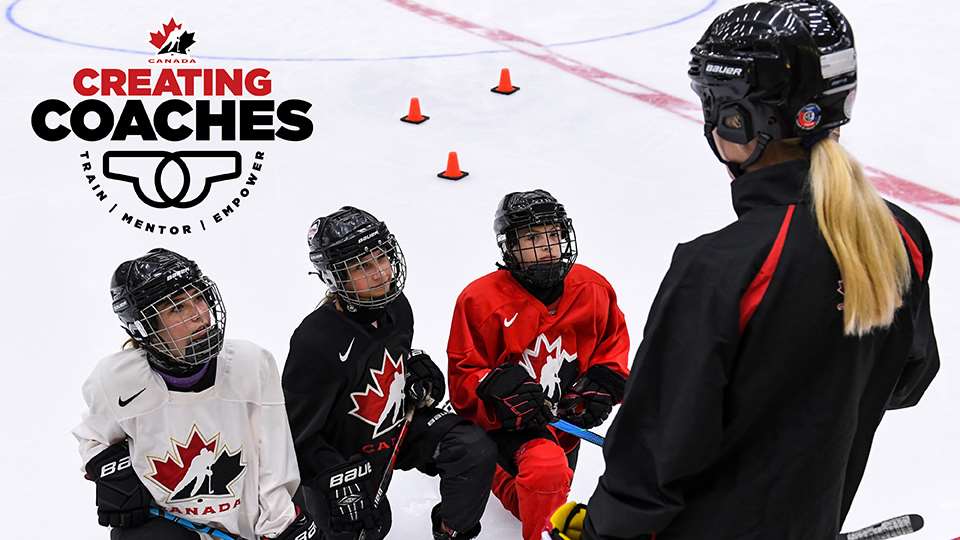
Creating Coaches program expands for 2026-27 season
22 U SPORTS women’s hockey players form new cohort
NR.057.26
|
September 18, 2026
|
()
CALGARY, Alberta – Hockey Canada and U SPORTS have announced this year’s incoming cohort of 22 student-athletes who will participate in the Creating Coaches program, which is designed to increase the number of women coaching hockey in Canada.
Launched in 2021 through a partnership between Hockey Canada, U SPORTS and the Hockey Canada Foundation, Creating Coaches provides opportunities for current U SPORTS women’s hockey players to receive training, mentorship, education and an honorarium as assistant coaches for U13, U15 or U18 girls’ hockey teams in their respective communities.
“As women’s and girls’ hockey in Canada continues to set participation records each season, expanding the Creating Coaches program is an important milestone to increase the number of women behind the bench and connect more girls in communities across the country with mentors who continue to compete in U SPORTS hockey,” said Marin Hickox, vice-president of women’s and girls’ hockey for Hockey Canada. “This program would not be possible without the generous financial support of the Hockey Canada Foundation, and we look forward to welcoming these 22 incredible women to Creating Coaches and supporting them throughout their coaching journey.”
The 22 student-athletes who will participate in the two-year program include representation from all four U SPORTS conferences:
- Mackenzie Beggs (Saint Mary’s University, AUS)
- Sienna Bullen (Queen’s University, OUA)
- Jacquelyne Chief (University of Saskatchewan, CW)
- MJ English (St. Thomas University, AUS)
- Grace Glover (University of Alberta, CW)
- Dana Goertzen (University of Manitoba, CW)
- Valérie Haché (Université de Moncton, AUS)
- Lindsey Johnson (MacEwan University, CW)
- Elizabeth Laberge (Nipissing University, OUA)
- Dallis Mackenzie (Mount Allison University, AUS)
- Makayla Mailhot (University of Windsor, OUA)
- Anya Misner (Carleton University, OUA)
- Alexie Olivier (University of Guelph, OUA)
- Camille Richard (Concordia University, RSEQ)
- Rachel Richards (University of Prince Edward Island, AUS)
- Juliette Rolland (Université de Montréal, RSEQ)
- Gabrielle Santerre (Bishop’s University, RSEQ)
- Jenn Shaw (Mount Royal University, CW)
- Tessa Stewart (University of Regina, CW)
- Robyn Storey (Ontario Tech University, OUA)
- Emma Wedgewood (York University, OUA)
- Kara Yackel (Trinity Western University, CW)
“Creating Coaches gives U SPORTS student-athletes a meaningful opportunity to develop as leaders while helping to shape the next generation of players,” said Pierre Arsenault, chief executive officer of U SPORTS. “We are proud to continue working with Hockey Canada and the Hockey Canada Foundation to expand pathways for women in coaching and strengthen the future of the game across Canada.”
The Creating Coaches selection committee includes representation from Hockey Canada, U SPORTS, Hockey Canada’s Members and the Hockey Canada Foundation Board of Directors.
During National Coaches Week, Hockey Canada is celebrating the positive impact coaches have on athletes in communities from coast to coast to coast, with coaching resources and features shared here .
For more information on Hockey Canada and, please visit HockeyCanada.ca , or follow along via social media on Facebook , X, Instagram and TikTok.
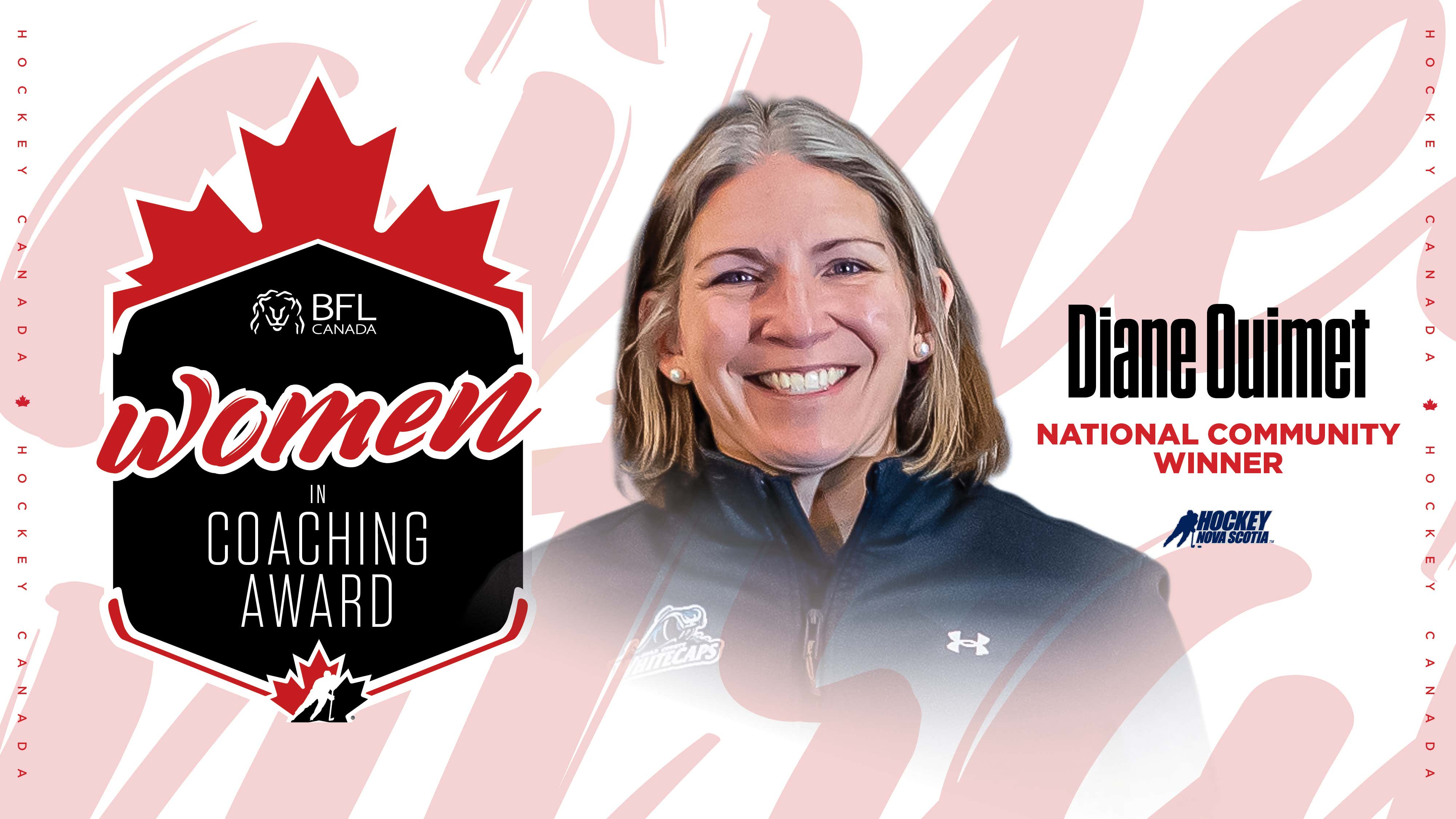
7 Questions with Diane Ouimet
The national Community winner of the BFL CANADA Women in Coaching Award shares how her high-level hockey experience has shaped her commitment to coaching at the grassroots
|
July 24, 2026
|
()
For Diane Ouimet, coaching is about bringing elite experience back to the community. After spending nine years as an athletic therapist in the Quebec Maritimes Junior Hockey League (QMJHL) in addition to working with Hockey Canada's National Women's Program and teams at St. Francis Xavier University, Ouimet built a coaching philosophy rooted in respect and inclusion.
After becoming a mother, her commitment to hockey was only strengthened. Inspired by the leaders she worked alongside at the highest levels of the game, Ouimet returned to minor hockey determined to give young players—including her own children—the same encouragement and sense of belonging she had witnessed throughout her career.
This season, Ouimet is the national BFL CANADA Women in Coaching Award winner in the Community category. The award celebrates women who are making a difference as coaches at the grassroots level of the game.
HockeyCanada.ca caught up with Ouimet to discuss how her experiences have helped her make a positive coaching impact.
What was your initial reaction when you learned you had been selected as a national winner of the BFL CANADA Women in Coaching Award?
I was surprised when I first heard that I had been nominated in Nova Scotia and selected as the provincial recipient. When I found out I had been chosen at the national level, I think I even experienced a little bit of imposter syndrome. There are so many incredible women coaches across the country, so I felt truly honoured to be recognized and receive this award.
I also think it’s important to recognize women in coaching in general because it can be difficult to get into the profession. For mothers who coach, it’s an especially tough balance. Anyone who steps up to do that deserves recognition as well.
What inspired you to get into coaching and what has kept you passionate about it over the years?
I started coaching in my early 20s, volunteering my time through soccer as a way to give back to the community.
Later, I spent nine years as an athletic therapist in the QMJHL, where I was exposed to the daily grind of a coaching staff. Since 2013, I've also worked with Hockey Canada's National Women’s Program as an athletic therapist, learning from phenomenal coaches and women in the game.
Once I had kids, I wanted to give back by bringing what I had learned at the national level back to the community. I had never experienced that kind of environment or exposure growing up, and I knew I was one of the lucky ones to have that opportunity. It was important to me to create that experience for others, especially for my daughters.
Since becoming a mother, a lot of my inspiration has come from wanting to be a female role model for my daughters and other kids in the community, so they see a woman on the bench and on the ice in such a male-dominated sport.
How would you describe your coaching style and what values do you hope your athletes take away from their experience with you?
I'm not huge on winning at this age. The age groups I've coached have all been fair play, so it's not that I don't care about winning. But if we're trying to develop athletes and keep kids in sport, they should want to come back and play the next year.
I put a big emphasis on being a good teammate. That starts with respect for each other, officials, the team and parents, along with hard work and kindness. I also want to create a safe space where players feel comfortable being who they are because when people can be their authentic selves, the whole team benefits.
I believe sports should be fun. If they're not, then what are we doing? I also believe in following the process rather than focusing on the results. We can't control everything, but we can control how we treat people and how hard we work.
Working in the QMJHL and with Hockey Canada shaped my coaching philosophy. I learned from coaches who led with calmness and respect. In five years with the Halifax Mooseheads, I heard one coach raise his voice maybe five times. That showed me that intimidation isn't the best way to get the most out of young athletes.
What has been the most rewarding part of creating a positive experience for young athletes and their families?
I think that’s the most rewarding part of coaching. If I look back at this past season, we struggled. We had around 246 goals against and maybe 14 goals for. But regardless of the wide range of skill levels on our team, I never once heard an athlete speak negatively about a teammate. You never would have known we hadn’t won many games because nobody ever left the rink upset.
I think that speaks volumes about the idea that the score isn’t the most important thing. In the end, we created a team where the girls were there for each other, regardless of the score or an individual performance. It was always a tap on the pads after a goal against, always supporting one another and keeping away any negative talk.
Who has had the biggest influence on your coaching journey and helped to shape you into the coach you are today?
When I worked in the QMJHL, I worked with coaches who broke that old-school coaching stereotype for me. I worked with Dom Ducharme in Halifax. He was there for the five years I was there. He was a teacher and coached in a style I hadn't seen before. It was more about teaching for him.
It was the same with Jon Greenwood, an assistant coach who was also a teacher. He brought that same even-keel approach, without hitting the extremes with his emotions. Jim Midgley was part of that group as well.
With the National Women's Team and at Hockey Canada camps and events, seeing Troy Ryan, Kori Cheverie, Vicky Sunohara, Caroline Ouellette, Carla MacLeod and so many others reinforced the importance of creating a positive team culture. Once you build that, the results are going to follow.
That group of people really made me realize the importance of team culture. Gina Kingsbury is another example. The way she led the women's program at Hockey Canada, getting everyone to buy in and support each other, showed how far that approach goes when you're trying to coach and teach.
What does it mean to you to be recognized with this award during such an exciting time for women’s hockey in Canada?
I was kind of on the periphery of it all, more like a fly on the wall for a lot of those conversations at those national-level events. I feel like I was able to witness the development of the PWHL and see what it has become today. Whether it was through conversations with athletes or being part of group discussions, I got to observe what was happening.
What I love about the PWHL is that it's giving more women and girls the opportunity to experience the same feeling I had working with athletes and coaches at the national level. It's hard to put into words, but it makes that feeling more accessible to more women.
It's empowering to see the growth of women's hockey, and being recognized with this award during such an exciting time for the game makes it even more meaningful. I'm honoured to be a small part of that growth.
What advice would you give to young women who are considering stepping behind the bench and pursuing a career in coaching?
One thing is for sure: You know more than you think you know, and you're capable of more than you think you're capable of. Take the chance and step up to be the role model you can be. If you don't do it, who will?
I've carried that mindset throughout my career, even as an athletic therapist. When I worked in the QMJHL, there were very few women athletic therapists. At one point, there were only two in the league, and by the time I left, I think there were about eight.
If you're able to be a visible woman in a leadership role, I think that does a lot for the girls who are coaching. Sometimes just showing up, being there and giving it a try can make a real difference.

7 Questions with Laurence Morissette
The national High Performance winner of the BFL CANADA Women in Coaching Award shares how teaching impacts her coaching philosophy, her passion for player development and advice for aspiring coaches
|
July 22, 2026
|
()
To Laurence Morissette, teaching and coaching go hand in hand. With her coaching philosophy focused on communication and being player-centric, the Saint-Hyacinthe, Quebec, native works to teach resilience, teamwork and leadership to her athletes.
This season, Morissette is the national BFL CANADA Women in Coaching Award winner in the High Performance category. The award celebrates women who are making a difference as coaches through leadership, mentorship and a commitment to player development. The High Performance category recognizes coaches working with athletes competing at the U SPORTS, Canadian collegiate hockey and professional levels.
HockeyCanada.ca caught up with Morissette to learn more about the journey that has shaped her as a coach and leader.
What was yourinitial reaction when you learned you had been selected as a national winner of the BFL CANADA Women in Coaching Award?
It was an honour when I heard the news. Being recognized alongside so many women who are pushing the game forward across Canada is a huge privilege for me. This award is a reflection of all the incredible players, coaches and mentors who have supported me along the way, and I will continue to share my passion for hockey every single day.
What inspired you to get into coaching and what has kept you passionate about it over the years?
I started coaching when my playing career ended. After playing hockey for the University of Ottawa Gee-Gees, I knew I wasn't ready to walk away from the rink, so I wanted to give back to the game that shaped who I am right now. What started as a transition out of playing quickly became a true passion. Today, whether I'm coaching at Heritage College, teaching and coaching at Louis-Riel High School or running summer camps, my passion is fueled by seeing the athletes grow. Watching players grasp new concepts, build their confidence and succeed both on and off the ice is what keeps me motivated every single day.
How would you describe your coaching style and what values do you hope your athletes take away from their experience with you?
I'm very player-centred and communication-driven. I believe in high standards while providing high support. I think it's all about creating a safe yet challenging environment where players feel motivated to push their limits. I want my athletes to walk away with strong self-confidence, a deep sense of accountability and a lifelong love for the game. I think hockey is a great way to teach resilience, teamwork and leadership. I think those values will serve them long after they hang up their skates.
How do you help your players grow both on and off the ice?
We all know that high performance comes with high pressure. But I believe that winning on the ice starts with growing as a person. On the ice, we focus on small details, smart tactics and staying calm under pressure.
Off the ice, my experience as a teacher has really helped me guide my players as student-athletes. We work on life skills like time management, leadership and managing their emotions. I want to treat them as a whole person, not just hockey players. We want to build their trust and character so they can succeed in demanding environments.
Who has had the biggest influence on your coaching journey and helped to shape you into the coach you are today?
I've been really fortunate to have good coaches. I had an amazing coach, Chelsea Grills, when I was playing at the University of Ottawa, so it was a really easy transition to being behind the bench right after I stopped playing hockey. There’s also my teaching career right now. One person I have in mind is Karina Potvin, who I work with. She has really helped me start my career and has shown me a lot of things. There are also people who are working at Heritage College who have helped me along the way. They taught me that great coaching is actually great teaching. They showed me how to communicate effectively with players, adapt to different learning styles, lead with empathy and always bring positive energy.
What does it mean to you to be recognized with this award during such an exciting time for women’s hockey in Canada?
It's absolutely incredible with the rise of professional hockey, women's hockey and the growing registration numbers across the country. Women's hockey has a spotlight on it like never before. To receive this award right now is truly special. It reinforces the importance of representation. I want young girls to look at the bench and see that there is a viable, exciting and rewarding path for them in coaching and leadership within the sport.
What advice would you give to young women who are considering stepping behind the bench and pursuing a career in coaching?
Just jump in. Don't wait until you feel like you know everything. I think the best coaches are lifelong learners who learn by doing. Trust yourself, trust your experience as a player and don't be afraid to voice your perspective. Don't be afraid to ask questions. Sometimes, it is just the energy you bring behind the bench that young players need.
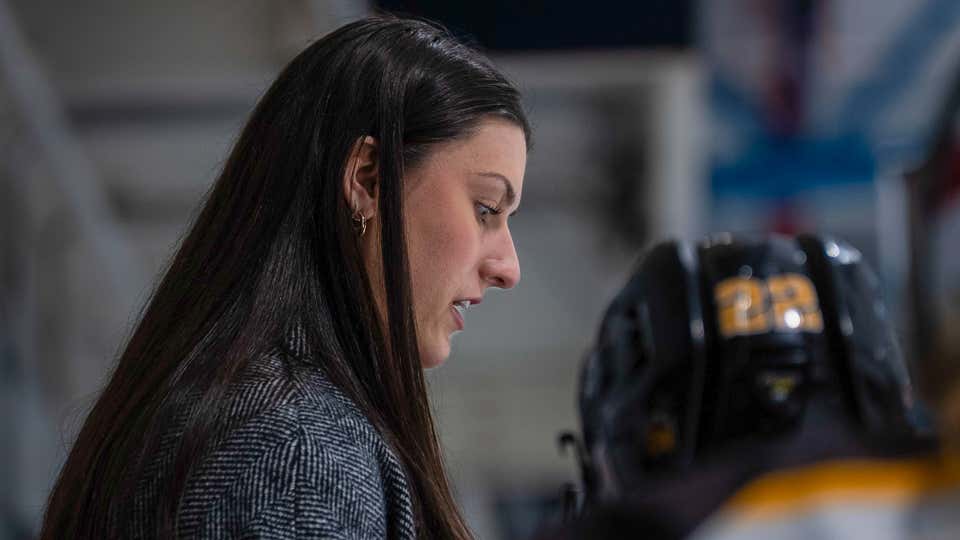
Janes gains and grows behind the bench
Thanks in large part to what she learned through the Creating Coaches program, Lyndsey Janes has stayed connected to the game and embarked on a promising coaching career
|
March 20, 2026
|
()
Lyndsey Janes always wanted to be a coach. She just thought that opportunity would be a little further into the future.
Instead, the former U SPORTS athlete is wrapping up her first season as assistant coach with the women’s hockey team at the University of Manitoba.
“Sports has always been the biggest part of my life. I knew it was something that I wanted to continue to be a part of once I was done playing,” Janes says. “I knew I wanted to coach in some capacity, but I just kind of thought it would be coaching my kids one day.”
Janes, who spent six seasons (2019-25) at Mount Royal University (MRU), captaining the Cougars in her final two years, got her first full-time coaching opportunity thanks to the Creating Coaches program through the Hockey Canada Foundation.
“I wouldn’t have been able to be in this position if it weren’t for the Creating Coaches program,” she says.
Creating Coaches provides selected student-athletes with mentorship, resources and support to ensure their coaching experience is positive. The goal of the program is to expose athletes to future opportunities in the game.
Janes started her schooling at MRU pursuing an education degree, but switched to a double major with bachelor’s degrees in business administration and marketing. She never felt comfortable with her schooling choice because she always envisioned herself in hockey in some capacity.
Head coach Scott Rivett suggested the Creating Coaches program; that was when she started dreaming a new role for herself after her playing days were over. She was nominated by Rivett and submitted her application, where she was accepted into the two-year program as part of the third cohort in the fall of 2023.
“[Scott] knew I had some experience coaching a tournament back home in Alberta, and he reached out asking me if I would be interested in the Creating Coaches program,” Janes says. “He nominated me, I applied and got accepted and the rest is kind of history.”
Janes was connected with two girls’ minor hockey teams in the Calgary area, spending one season as an assistant coach with the Airdrie U18 AA Lightning and another with the Calgary U18 AAA Fire while she was finishing her degree at MRU.
“My role was part-time since I was still playing, but I think that really sparked the idea that maybe this is something I could do as a career,” she says.
She learned a lot from the coaches she worked, seeing how to run the dressing room, practices and games to build rapport and trust with the players.
“My first experience of being on the bench as a coach was a cool experience,” Janes says. “I wasn’t always the fastest skater, had the best shot or was the most skilled. But one of my strengths was my IQ, my vision and the way I see the game. I found that coaching allowed me to use those strengths in a different way.”
Janes knows what it feels like to have both sides of coaching. Throughout her playing years, she experienced positive coaches that increased her love for the sport. She also experienced harder seasons with poor coaching.
“My journey through hockey was mostly a positive one in my development and
all the opportunities that I got to have,” she says. “I had my fair share of
great coaches who taught me so much and I also had my share of poor
experiences. I knew that I want to give my players a positive experience and
have an impact on the next generation of athletes.”
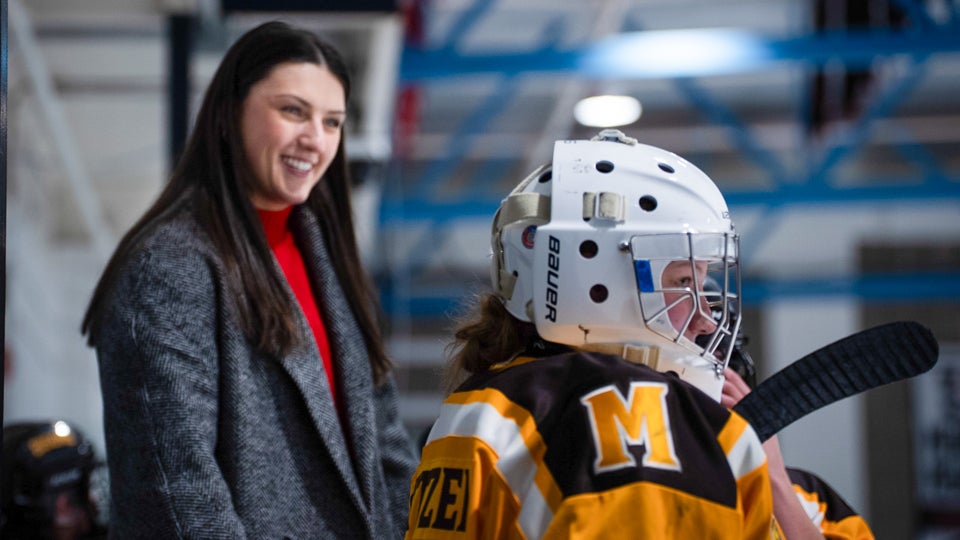
The opportunity with the Bisons came together quickly last summer. In May, the team hired Jordan Colliton, who was Janes’ associate coach during her time at MRU. She also spent two years as head coach of Leksands IF in the Swedish Women’s Hockey League.
Janes and Colliton got in touch and discussed the role and went through the hiring process. Janes is grateful for the Creating Coaches program for helping her get to this role and opportunity with confidence.
“It wasn’t an opportunity that I was necessarily expecting, so when it was presented to me, it was something I couldn’t pass up,” she says. “In the span of a couple of weeks, I moved to Winnipeg. This is something I did not expect to experience so early in my coaching career.”
The Bisons had a so-so regular season, finishing fifth with a 13-15 record, but got hot at the right time; they upset MRU in the Canada West semifinals to reach the championship series, where they came up just short against the University of British Columbia.
Next up, they’ll face the best from across the country at the U SPORTS national championship, March 19-22 in Waterloo, Ontario.
“I’m so glad I took this chance because I have learned so much and they are such an incredible group of athletes,” Janes says. “I’ve never seen a team so close-knit before and have something so special going on within the locker room. It was just an awesome year.”
Now that Janes has turned her ‘one day’ dream into reality, she wants to stay present and enjoy the moment with the Bisons and the continue to learn and grow as a coach. But she’d also be lying if she hasn’t set her next big goal of coaching the best players in the world.
“This year absolutely solidified that I want to be a coach. There is no other place I can see myself than being on the bench. Coaching is the first thing I’ve experienced that has given me the same feeling of passion and excitement that playing hockey did,” she says. “Obviously, the gears start turning and you start thinking about where you want to take it and as a female, it’s an exciting time in hockey and I think the opportunities are kind of endless.
“I know I am talking big dreams, but I would love to coach in the NHL or PWHL with the world’s best players. But I am super thankful that I am already working with such elite-level athletes today.”

The Audacity To Try
A proud graduate of the Creating Coaches program, Alex Boulanger believes in the power of putting yourself out there
|
November 27, 2025
|
()
Alex Boulanger used to spend her working hours waiting for the weekend. To get away from the office and back to the rink. She didn’t care about the level; she just wanted to spend more time around hockey. Then it finally occurred to her that she could. She just had to try.
“What was tough for me was [worrying about] what other people were going to think … but at the end of the day, it’s what you’re going to think if you don’t,” Boulanger said. “Have the courage to just go … often times [success] is just the audacity to go and try.”
So, at 29 years old, the product of Brossard, Quebec, went back to university in pursuit of a career in hockey.
She enrolled at the Université de Montréal and played two seasons with the Carabins, until there was no longer room for her on the roster. Though disappointing at the time, being forced to find a new team (and therefore a new school) was a stroke of luck for Boulanger.
She reached out to Concordia University coach Caroline Ouellette and asked for a tryout. It went well and she was invited to join the team.
“I didn’t know Alex very much, but I had heard great things about her character, her leadership and about her as a teammate,” said Ouellette, a four-time Olympic gold medallist and 2023 Hockey Hall of Fame inductee. “I knew she was very involved in the community already as a student-athlete, in coaching and volunteering in different areas of hockey, so for us at Concordia it just made sense to have that type of leadership and character and experience.”
“That’s where the passion and the goal to coach really grew, especially under [Ouellette], who I can now call a good friend and a good mentor to me,” Boulanger said. “She and Julie [Chu] have been very kind to me, took me under their wings.”
U SPORTS transfer rules require a player to redshirt for a season before being eligible with a new school, so by the time Boulanger suited up for the Stingers, she was in her fourth year of university. Which, coincidentally, meant she was eligible for Creating Coaches, a program launched by Hockey Canada and the Hockey Canada Foundation (HCF) in 2021. It is designed to encourage more women into leadership positions by supporting senior student-athletes to try coaching.
“It’s tough when you want to start coaching and you’re a player … you need training, but you also need the connection to a team,” Boulanger said, explaining how the Hockey Canada program facilitates the needs of the student-athlete and the minor hockey teams they coach.
In addition to providing coaching certification, Creating Coaches connects the athletes with a minor hockey organization to build a coaching resume. A financial subsidy from the HCF enables athletes to commit more easily to the whole program by not having to balance part-time work on top of everything else.
“If it wasn’t for the program and the financial support that’s through the Hockey Canada Foundation, there’s no way I could have committed all my free time to a team,” Boulanger said, who spent two seasons with CEGEP teams while finishing up her own schooling.
“You can tell right away as a coach yourself, there’s a certain few that have what it takes to become a coach,” Ouellette explained. “I think Alex always had the intangibles: the work ethic, the passion, the dedication for the game to better herself, to better her teammates and to want to study the game.
“We were really, really so proud that she was chosen as part of the Creating Coaches program because we really believe it’s truly an important program to build and to give opportunities to more student-athletes to start coaching and to develop a passion for it.”
Boulanger graduated from Concordia (and Creating Coaches) in 2023 and felt ready to make a living out of hockey. A longtime friend and former minor hockey teammate, Valérie Bois, had just been named head coach of the women’s hockey team at Bishop’s University, so Boulanger made a call. One brief, formal meeting later, she was a full-time assistant coach.
“I was coaching players I had just played against for the past two seasons,” Boulanger pointed out. “But at some point, you just have to take the opportunity when it comes.”
Boulanger is no stranger to opportunity. With the Stingers, she was part of back-to-back U SPORTS national championship drives, including one title win. With the Gaiters, she was back in the national championship game in just her second season behind the bench. But this time, Boulanger was facing down a friendly foe. Waterloo Warriors assistant coach Emma Cheeseman was in the inaugural Creating Coaches cohort with Boulanger.
“Emma and I, during the starting [lineup] presentation, looked at each other and were just like ‘Let’s go!’” Boulanger remembered. “It was just like coming full circle.”
“We were so very proud for her and Valérie Bois, who is also a great friend in coaching,” Ouellette said. “We felt a lot of pride for Alex in her young coaching career because we know how hard she worked to bring Bishop’s to the level they were playing at when it mattered the most.”
Coming off the national title, Bois was offered a position in the Professional Women’s Hockey League. When it was time to tell Boulanger, she just had one question.
“She gave me a call and said, ‘When would you be ready to be a head coach?’” Boulanger said with a grin.
Boulanger was named Bishop’s head coach for the 2025-26 season. Eight years after starting a journey to break away from a desk, Boulanger was living her dream.
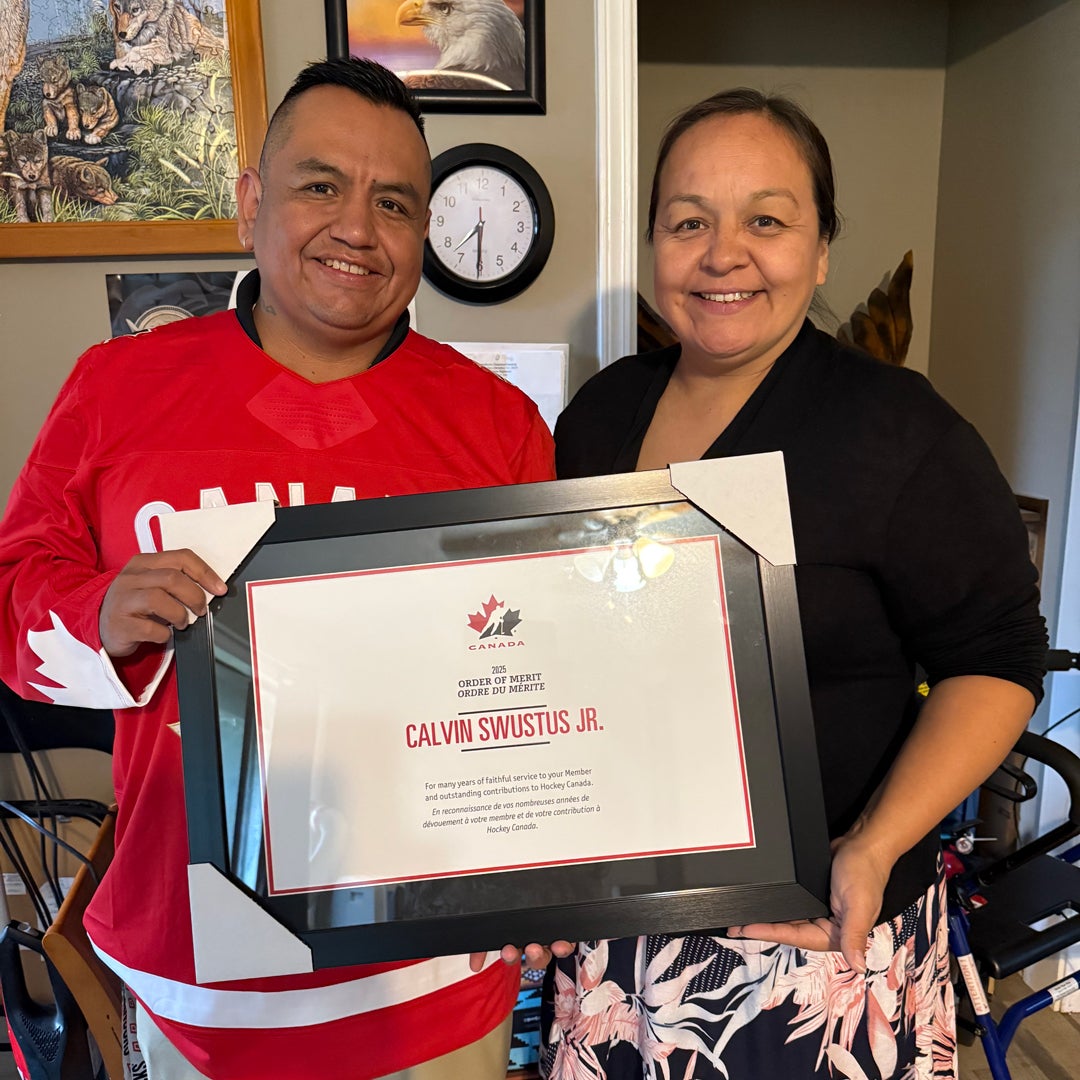
A new way to love the game
Calvin Swustus Jr. played the game for decades before finding his true passion within it: being a coach and cultural advisor for the Salish Storm’s Cowichan program
|
September 19, 2025
|
()
When you’ve spent years playing hockey, it’s hard to imagine there is another—maybe even better—way to engage with the game. At least that’s what Calvin Swustus Jr. used to believe, until he came across the Salish Storm Hockey Association (SSHA) with his youngest daughter, Maleah, four years ago.
“For me, to see it with my own eyes fired me up to want to give back because… hockey saved me,” Swustus says. “Hockey built me to who I am today.”
Today, Swustus is an impactful community leader in the Cowichan Valley on Vancouver Island. Not only is he a council member of the Cowichan Tribes, but in 2024 he was elected to BC Hockey’s Board of Directors. He has been recognized for his commitment to the game at both the provincial and national level and has been an assistant coach for Maleah’s team. But it is his role as coach and cultural advisor for Salish Storm's Cowichan program that remains his top priority.
“I adjust my schedule around hockey for the kids,” Swustus laughs, explaining he’s changed his work schedule to allow him to make it back in time for the Storm.
“He brings both the cultural aspect to it, but also just that enthusiasm he has for hockey. He’s an absolute lover of the game,” says Alan Macdonald, founder and director of SSHA. “I think that’s really important, having that passion for the game… and a real focus for the kids in his community.”
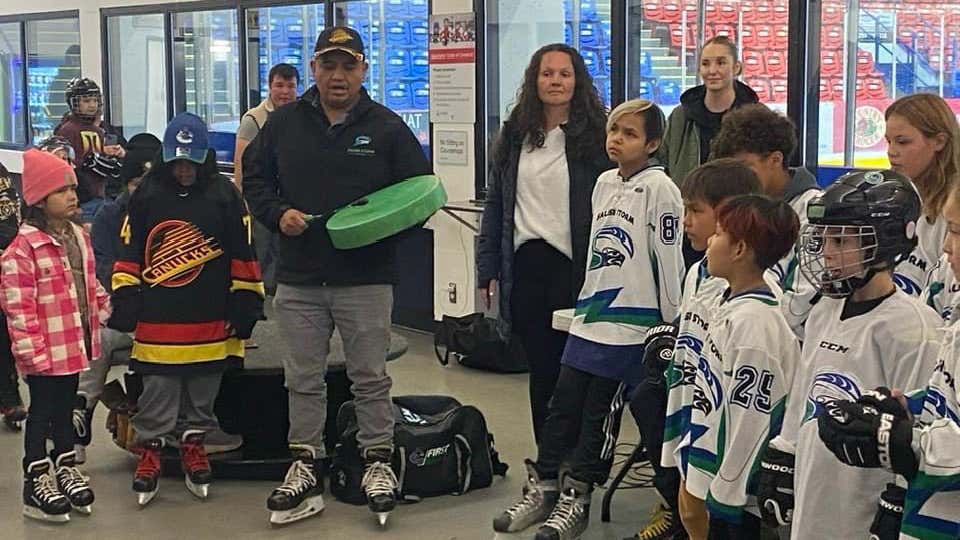
The SSHA began about six years ago to give Indigenous youth a barrier-free introduction to hockey. There are currently programs running in Nanaimo, Cowichan (Duncan), Saanich and Vancouver with a hope to expand soon.
All the equipment is provided, thanks in part to a generous contribution from the National Hockey League Players’ Association Goals and Dreams fund. Ice time is covered by the association. But the program is so much more than just skates and sticks.
Every ice session starts with a traditional song, drumming or teaching by an elder or a leader. Swustus drums before all of his practices and the players often join in, banging their sticks on the ice. It creates a feeling of community and of family.
“It keeps it encouraging for all players so when they’re super, super new, they don’t feel ashamed that they keep falling,” Swustus says. “I remember my first time stepping on the ice, when I fell, I looked back at my dad and thought, ‘I don’t want to do this,’ but he wouldn’t let me off the ice.
“[I’m] glad he didn’t.”
Swustus credits his father for his introduction to the game and helping him build a thick skin when faced with racial discrimination from opposing teams as the lone Indigenous player on many of his minor hockey teams. While those memories remain, they don’t haunt him. Instead, Swustus reflects on how the Salish Storm is making hockey more accessible for Indigenous youth, with more transitioning into minor hockey every year.
“I was tying up Maleah’s skates when another parent was in the hallway and yelled, ‘Cal! This is our daughter’s first year of minor hockey, all thanks to you guys, Salish Storm,’” Swustus says, adding he often gets called ‘coach’ even when he sees a Storm player away from the rink.
“It really feels honourable, having young individuals who have that respect for you,” Swustus says. “It gives me that fire to keep doing what I’m doing.”
Swustus has big dreams for the SSHA to expand into other First Nations or add development programming (like speed skating) for Indigenous youth in minor hockey programs. Macdonald says these goals make Swustus a real asset to the program, and they’re proud to have him as part of the team.
“Cal and I really share a passion for getting the kids involved,” Macdonald says. “And when the kids see Cal, many of them know him already. They respect him and they like him.”
That’s really what any young player wants. A coach who wants to be there at the rink, with them.
“I remember the awesome coaches I had, and I want to be an awesome coach,” Swustus says with a smile. “I want to be remembered as an awesome coach.”
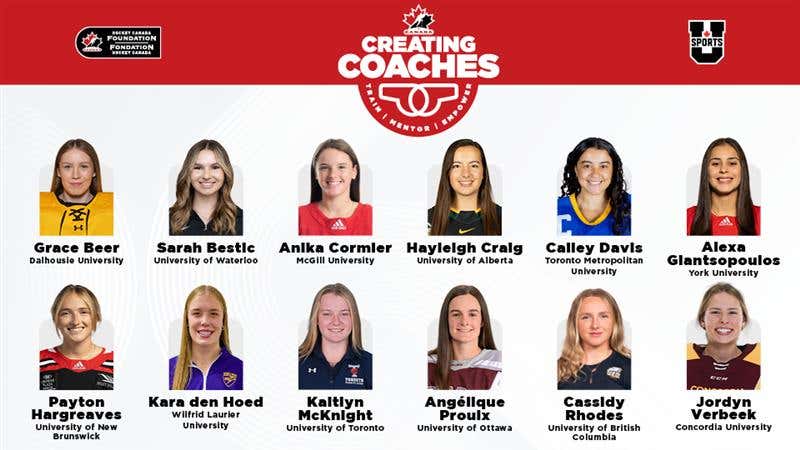
Twelve student-athletes added to Creating Coaches program
Fifth cohort, representing student-athletes from all four U SPORTS conferences, to join two-year program
NR.058.25
|
September 17, 2025
|
()
CALGARY, Alberta – Hockey Canada and U SPORTS have announced that Creating Coaches, a program designed to increase the number of women coaching hockey in Canada, has expanded to welcome 12 student-athletes as part of its fifth cohort.
The student-athletes will continue to play U SPORTS women’s hockey while serving as assistant coaches for U13, U15 or U18 girls' hockey teams in their respective communities. Each student-athlete will receive training, mentorship, education and an honorarium throughout the 2025-26 and 2026-27 seasons.
This year’s cohort includes student-athletes from 12 U SPORTS women’s hockey programs across all four of its conferences:
• Grace Beer (Dalhousie University, AUS) • Sarah Bestic (University of Waterloo, OUA) • Anika Cormier (McGill University, RSEQ) • Hayleigh Craig (University of Alberta, CW) • Cailey Davis (Toronto Metropolitan University, OUA) • Kara den Hoed (Wilfrid Laurier University, OUA) • Alexa Giantsopoulos (York University, OUA) • Payton Hargreaves (University of New Brunswick, AUS) • Kaitlyn McKnight (University of Toronto, OUA) • Angélique Proulx (University of Ottawa, OUA) • Cassidy Rhodes (University of British Columbia, CW) • Jordyn Verbeek (Concordia University, RSEQ)
“We are very excited to expand the Creating Coaches program to welcome even more incredible student-athletes from across U SPORTS this season, thanks to the generous financial support of the Hockey Canada Foundation,” said Marin Hickox, vice-president of women’s and girls’ hockey for Hockey Canada. “Last season set a record for the most women coaching hockey in Canadian history, and we know that programs like Creating Coaches are critical for continuing to support the recruitment, retention and development of women and girls in hockey leadership roles.
To each of our new Creating Coaches participants, congratulations on being nominated and selected to join this program. We cannot wait to follow your journeys behind the bench for years to come.
Creating Coaches was launched in 2021 through a partnership between Hockey Canada, U SPORTS and the Hockey Canada Foundation to provide current student-athletes with opportunities to begin their coaching careers while still playing university women’s hockey.
Since its inception, Creating Coaches has included student-athletes from 23 U SPORTS women’s hockey programs and all four of its conferences.
“During National Coaches Week, it’s fitting to celebrate the investment in people who will shape the future of our sport,” said Pierre Arsenault, chief executive officer of U SPORTS. “Creating Coaches gives U SPORTS athletes a clear, supported runway to develop as coaches and mentors, and we’re proud to expand this program with Hockey Canada and the Hockey Canada Foundation.”
The Creating Coaches selection committee includes representation from Hockey Canada, U SPORTS, Hockey Canada’s Members and the Hockey Canada Foundation Board of Directors.
During National Coaches Week, Hockey Canada is celebrating the positive impact coaches have on athletes in communities from coast to coast to coast, with coaching resources and features shared here.
For more information on Hockey Canada, please visit HockeyCanada.ca, or follow along on Facebook, X, Instagram and TikTok.
For more information: |
October 24, 2026
October 22, 2026
October 22, 2026
October 19, 2026
May 4, 2026
July 8, 2026
May 7, 2026
Shannon Coulter - May 29, 2026
Shannon Coulter - May 30, 2026
Photos
Videos
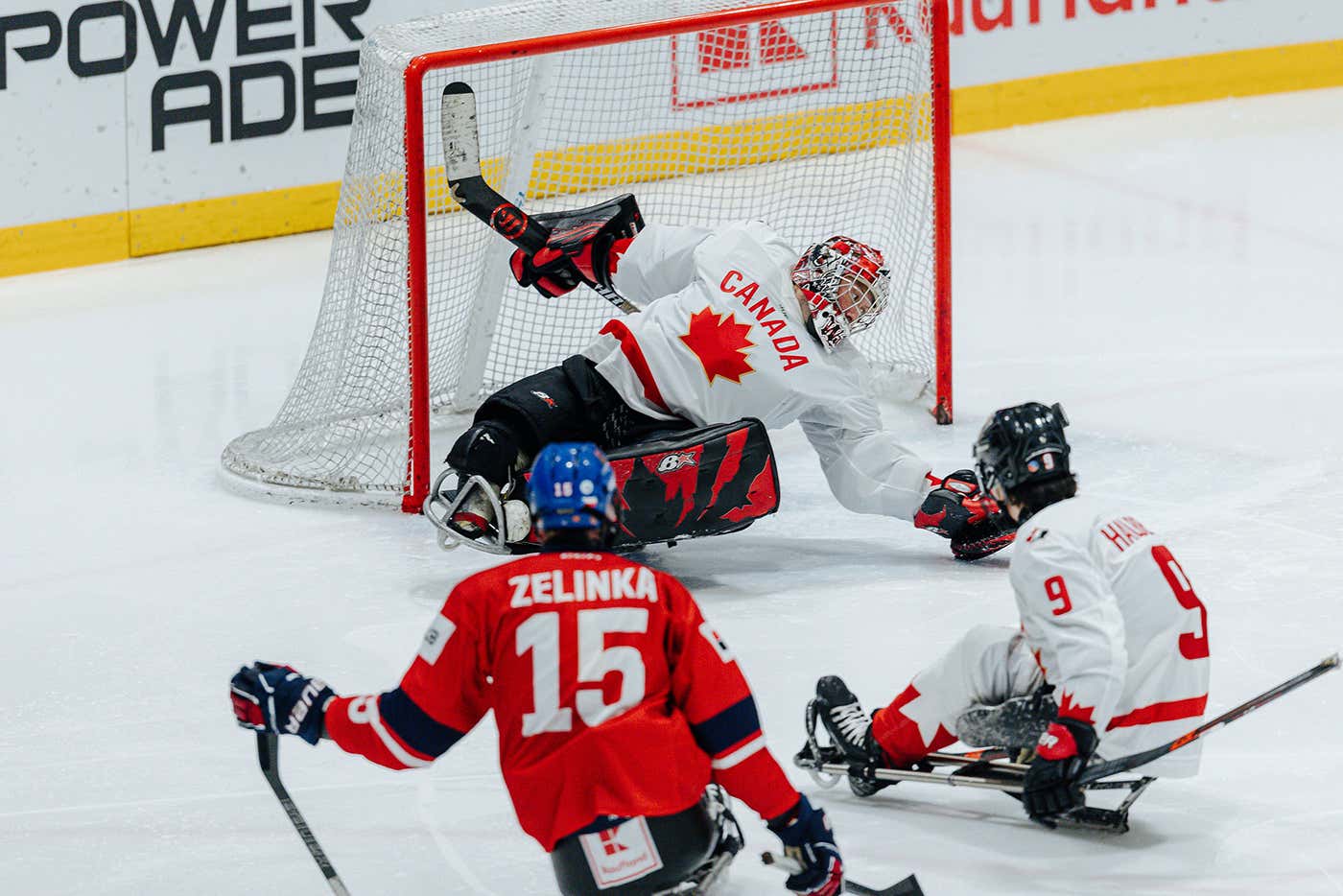
2026 IPH Cup: CAN 7 – CZE 0 (Preliminary)
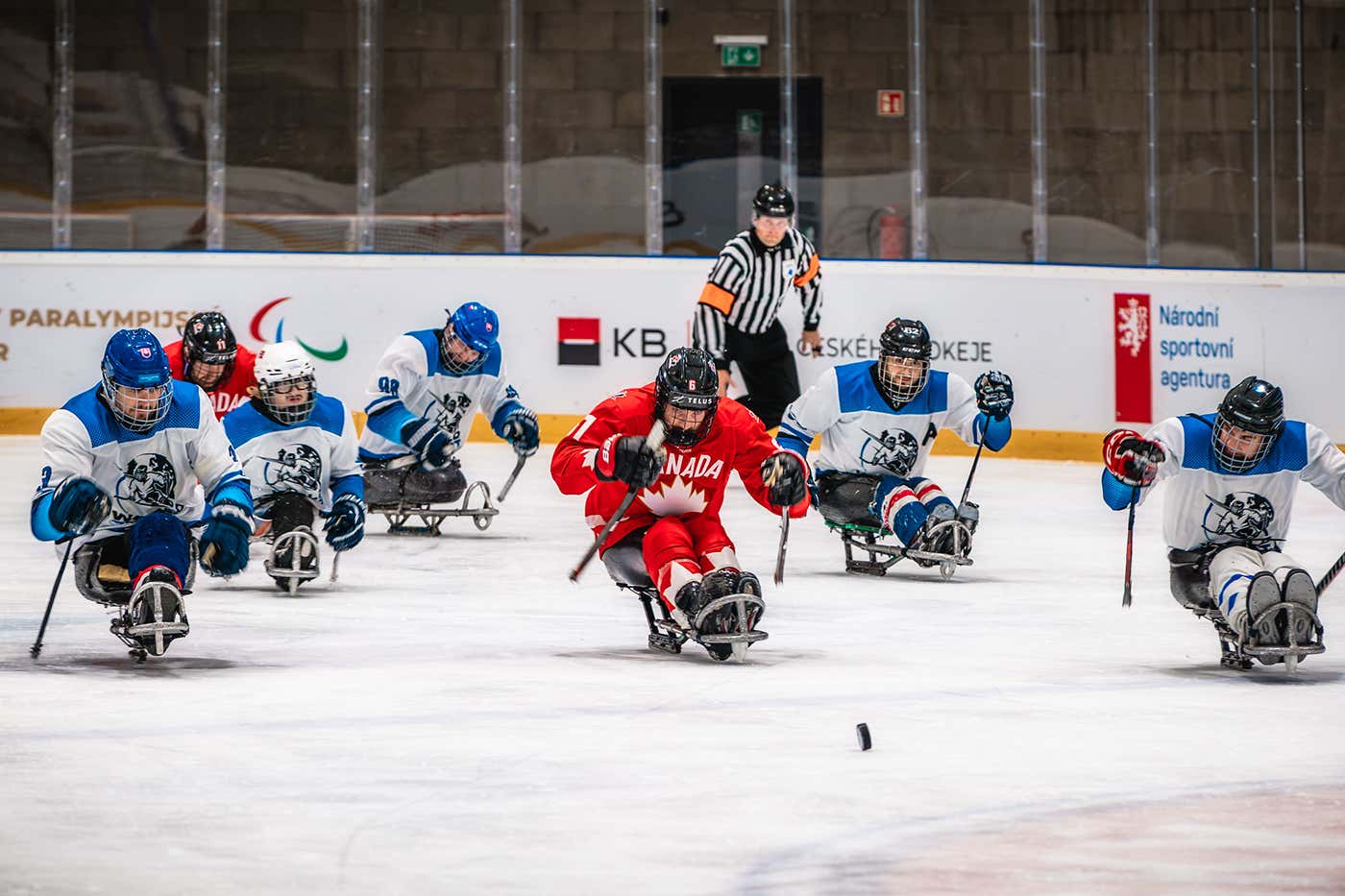
2026 IPH Cup: CAN 11 – SEL 0 (Preliminary)
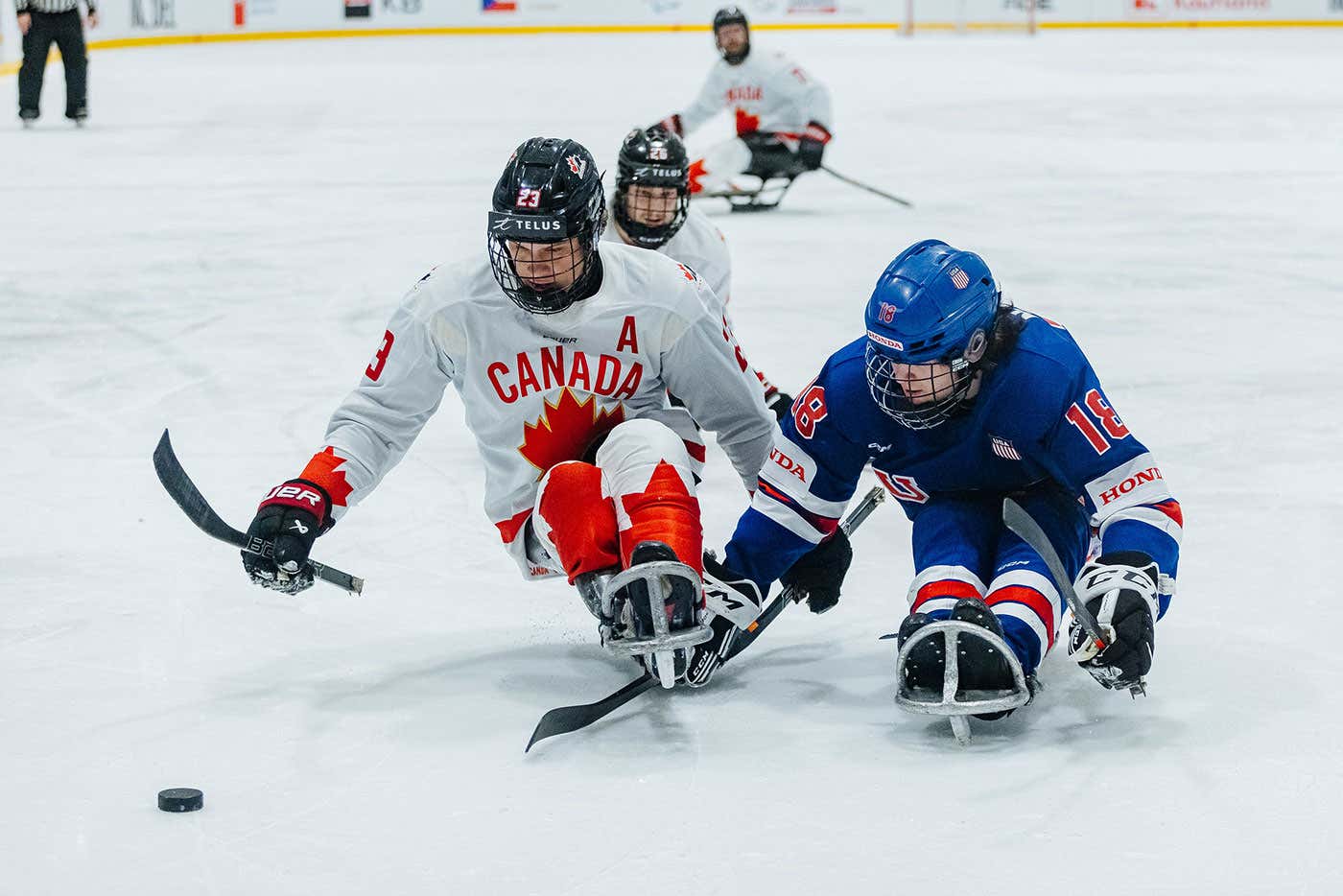
2026 IPH Cup: USA 5 – CAN 3 (Preliminary)
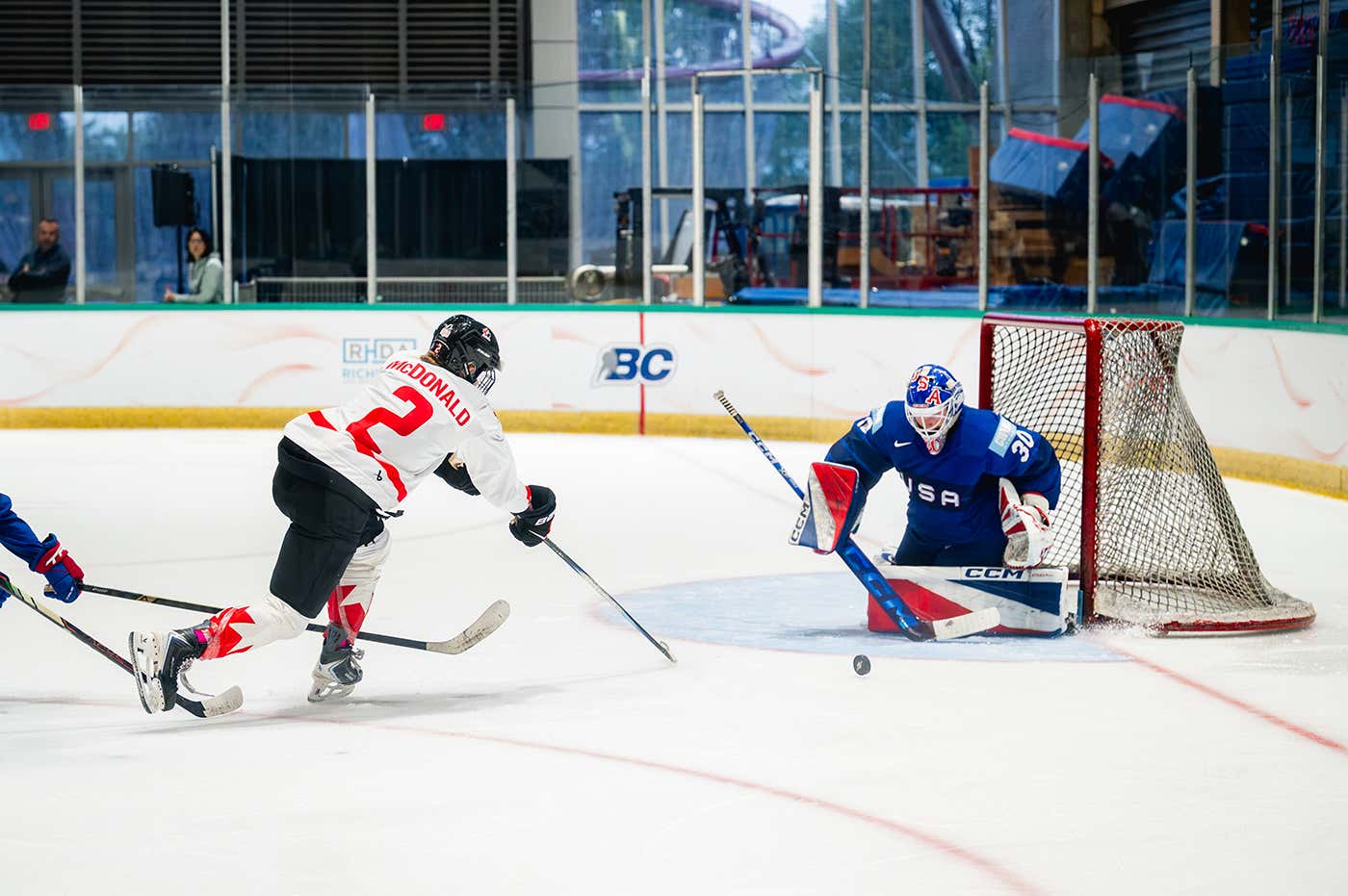
2026-27 NWDT: USA 5 – CAN 2 (Game 3)
- <
- >
