




Schedule
Team Canada (Men)
IIHF World Junior Championship | Dec. 26, 2026 - Jan. 5, 2027
IIHF U18 Men’s World Championship | Apr. 22 - May 2, 2027
IIHF World Championship | May 14-30, 2027
Hlinka Gretzy Cup | Aug. 3-8, 2026
U20 Summer Showcase | July 26 - Aug. 1, 2026
U17 Development Camp | July. 19-21, 2026
2026 Olympic Winter Games | Feb. 11-22, 2026

Search
7 Questions with Jeff McLean & Dean Petruk
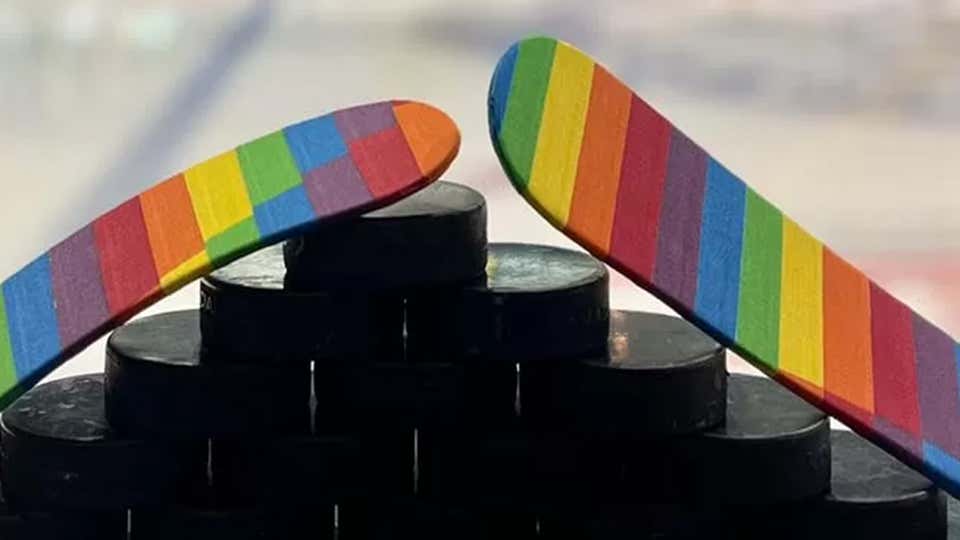
The co-founders of Pride Tape talk about the origins of the product, their favourite memories of the last decade and the impact on the LGBTQ+ community
|
June 24, 2026
|

()
What started as a simple graphic has become one of the most recognizable symbols of the LGBTQ+ community in sports.
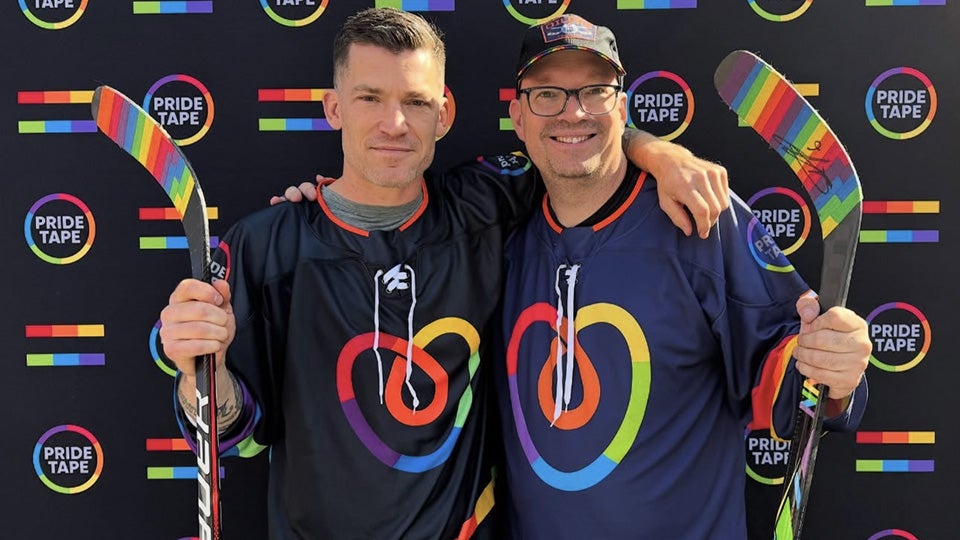
This year marks a decade since Jeff McLean and Dean Petruk co-founded Pride Tape. According to its website:
Pride Tape is a badge of support from teammates, coaches, parents and pros to young LGBTQ+ players. It shows every player that they belong playing the sports they love. Proceeds from the sale of Pride Tape also helps to support LGBTQ+ youth outreach and educational initiatives. That means every roll of tape will make an impact in sports and beyond. Our collective goal is to make sport, at all levels, a more welcoming and inclusive environment for players, their families and fans of every race, colour, age, ability, religion, national origin, gender, gender identity, gender expression, sexual orientation and socio-economic status.
HockeyCanada.ca caught up with McLean and Petruk to talk about their journey over the last 10 years.
Where did the idea for Pride Tape originate from?
JM: Ten years ago I was working for an ad agency in Edmonton, and we were working with Dr. Kris Wells at the University of Alberta on a project called nohomophobes.com, which scraped homophobic tweets in real-time off Twitter. What we found when we were testing the site was that homophobic tweets were more prevalent during major sporting events. We felt we needed to do something to address homophobia in sports, and we didn't know what that was.
I was charged to come up with an idea, and we chose hockey, because I had some friends in the NHL, as did Kris with Andrew Ference, who was captain of the Edmonton Oilers at the time. Originally this was just a one-off piece of creative with hockey tape—a picture of a player taping up their stick and then using Photoshop to put the six colours on the tape. Driving to work one day, I thought if they can make repeat-pattern hockey tape—like with the Hockey Canada logo on it, the Batman logo, things like that—I wonder if they could repeat colours and we could actually make this tape.
That's when I got a hold of Dean. We had been friends for a long time, working on some charity hockey events with our friends at the NHL Alumni Association, and together we went down the path of figuring out how this stuff could get made, and the rest is history. The Oilers put six different coloured rolls of tape on their sticks during their skills competition to emulate the idea of Pride Tape, and that got the attention of global media everywhere.
What was it like from your perspective, watching the growth in real time as more players and teams started to use the tape?
DP: We had a lofty ambition that all we wanted is one player to use the tape in some form, whether it was on the shaft or on the butt-end of the stick or actually on the blade; it really didn't matter to us, we just said wouldn't it be great if one player did that, and then all of a sudden this whole thing evolved. Every day that goes by, we think we've seen it all, and then something else happens in the community, or to a certain person that reaches out to us, and the stories we have, the heartfelt stories of people in a difficult situation, and the tape has helped them bridge that and find purpose.
We've heard it all, we've seen it all, and we have proof that it's changed lives and saved lives out there. It really grew beyond what the actual purpose of the tape was, the message, and we've really become the bridge to this conversation, to this support unilaterally, and it's been amazing. People use it for different reasons, and some are on the ally side of things, some are in the community. It’s just been way beyond what our expectations were. We've seen it all, but we haven't. It just keeps growing into something bigger and better.
All are welcome here 🏳️🌈 pic.twitter.com/TZAald7bbK
— Pittsburgh Penguins (@penguins) March 26, 2024
Do you still get that rush of excitement, 10 years on, seeing people use Pride Tape?
JM: It is something as simple as driving home and seeing somebody walking down the sidewalk with their hockey bag slung over their shoulder and a stick taped up with Pride Tape, and they're on their way to the outdoor rink.
When you see Pride Tape out in the wild, it hasn't really, after 10 years, sunk in, you know? It still moves you because those individuals, these strangers that you see with it, that was their choice to buy it and to put it on their sticks or their baseball bats, because they believe in the message. We always say, we just make tape, you make it powerful, that's really what it's about. Nobody owns Pride Tape, except the people that buy it and believe in its messages.
Thanks to the success of Heated Rivalry, there was a massive influx of people wanting to support the mission of Pride Tape and have it on their sticks after seeing the show. Can you speak to that experience?
JM: There is a natural synergy, and I think the big thing for me to doing the Instagram feed is all the fan art, all the creativity and wonderful artwork done by fans of the show and of the tape, and they just naturally meshed it together. People were doing Heated Rivalry posts with artwork and they were naturally just putting in sticks with Pride Tape on it, which was really, really cool. So, I think that's another strength of what's been created here is the creativity of people, and they're doing things that we're not smart enough to have imagined. They just take it to another level.
DP: It was instantly relevant and everybody related to it. I think the biggest difference is that Heated Rivalry has hit mainstream. We've always had the supporters: girls’ hockey, women's hockey, the minority groups that were using it as their support tool and then the community, of course, but Heated Rivalry became this phenomenon that is mainstream.
This might be tough to narrow down, but do you have a favourite Pride Tape story?
JM: We were doing a Pride Night in Edmonton with the Oilers, and they put us on the screen and interviewed us to tell our story. Walking back to the concourse where we were handing out tape, one of the ushers stopped and said, ‘I just wanted to let you know how much this tape means to me and my family. I'm out, and it severed, unfortunately, the relationship with my father and bringing the tape home and talking about the tape has now brought us back together and we have a wonderful relationship,’ and they attributed the tape to that story. That’s pretty incredible and pretty moving when you see it happening at the grassroots level.
It has been 10 years of what we call proof of concept; some of the things that we can do now, we might not have been able to do five years ago or seven years ago, but now that we have the connections that we have globally, within the leagues, the NHL, the PWHL, and those friendships that have been forged make it possible to make a difference in people's lives.
Do you have anything planned for the 10-year anniversary?
JM: More visibility. Dean is on his way to Seattle for their Pride event. I am in Edmonton. I've got the Riverhawks baseball team's Pride Night, which I design the jerseys for. And then we've got we got Luke Prokop’s documentary coming up at the end of June, so we’ve got premieres in San Francisco, Edmonton and Toronto, and we have tape there to give away for everybody coming to the theaters.
It's very ad hoc. Dean and I do this on a voluntary basis, I always say off the corner of our desks. We do have real jobs, but we try and do as much as we can and get out to more events and more tournaments in the future. We would love to do more speaking engagements to tell our story, in the hopes that it can help people. We have the idea of a book in the works as well, about our 10-year history with Pride Tape. Just getting out there to just meet as many people as possible and get the tape in the hands of as many people as possible, because they become those influencers that can make a difference in somebody's life.
Is there anything you would like to finish on?
JM: The one thing that has come up probably more now than it has throughout the 10 years is that I don't think that people realize how much this simple act can make a difference in somebody's life. We need to keep working at it and keep trying harder to let people know that this is making a difference.
I think oftentimes it's like, well, it's a roll of tape, it goes on the stick. It's a very simple act, but it's bold and we can reassure people that it does make a difference in people's lives; when they see it, even if they don't hear it directly, they will be creating a conversation somewhere about the importance of inclusivity in hockey and in sports, and we just encourage people to use it, because it does make a difference. Give it a try and it will surprise them.
7 Questions with Harrison Browne
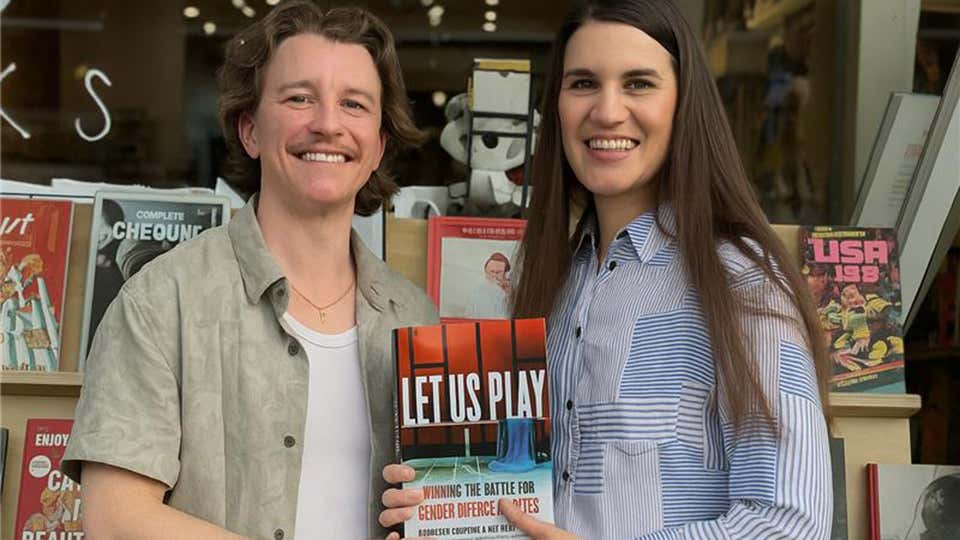
The trans advocate, Team Canada alumnus and newly published author opens up about his new book and the ongoing fight for gender diversity in sports
|
June 18, 2025
|
()
Hockey provided Harrison Browne with an opportunity to feel openly comfortable. It also granted him a voice to proudly discuss his journey.
That journey now includes writing a book alongside his sister, Rachel, an investigative journalist. Let Us Play: Winning the Battle for Gender Diverse Athletes was published late last month and includes Harrison’s experiences and those from athletes, coaches, policymakers and trans advocates.
HockeyCanada.ca caught up with Browne to talk about the new book and his journey in and out of the game.
HC: What inspired you to write Let Us Play?
HB: What initially started out as a memoir shifted to a larger-scale project highlighting the voice of trans athletes from all levels all over the world when my sister and I started to see the effects of the worsening discourse around trans athletes in the media and political sphere. We wanted to take the narrative back and give voices to these amazing trans and gender-diverse athletes who are often left out of the conversation when it impacts them the most.
HC: You made history as the first openly transgender athlete in professional hockey. Looking back, what was the toughest part of that journey and what are you most proud of?
HB: The toughest part of that journey was not the coming out or the reaction from the hockey world, it was my life outside of the sport. Being able to be Harrison within the rink and the locker rooms made it harder to be someone else outside of that by strangers who didn't know my story, who just viewed me as a queer woman. It was hard to be misgendered like that outside of sports.
I'm most proud of the positive visibility that came through my coming out. I was welcomed by the fans, by my teammates, by the league and that was an example that people could turn to. Seeing a trans athlete celebrated when the discourse around trans people is usually around struggle and negativity meant a lot for people looking in. Getting messages on my social media from other trans individuals was really empowering to know being myself was helping others do that too.
HC: The book speaks to the illusion of fairness in sports. Can you unpack what that means, especially for readers who might not yet understand the systemic inequities at play?
HB: Fairness in sports is a fallacy no matter how hard sport governing bodies can try to level the playing field. There are many things that give an athlete an advantage over another, but the biggest barrier to true fairness is socioeconomic status and access. No matter what an athlete's natural ability may be, their access to the best equipment, coaching, nutrition, playing facilities and other things is the biggest indicator on if an athlete can truly excel or not. We see it play out in the Olympics all the time with more western countries having that competitive edge over developing countries. We need to do more work in closing those socioeconomic gaps instead of focusing on trans athletes who make up such a small percentage of elite athletes.
HC: What do you think people are missing when they talk about inclusion in sport?
HB: Right now, we're seeing more and more policies and mentality around sports shift to an exclusionary approach rather than inclusionary. The rhetoric around the reasoning to bar a community from being able to participate in sports is that they pose an unfair advantage, that they will stop other athletes from winning or gaining scholarships. We need to get the focus on sports back to the health roots and what sport participation, especially at the youth level, is really about—enrichment, exercise, relationships, life lessons and memories. Why would we want to exclude any child from experiencing that when that is the true ethos of sports?
HC: You and Rachel spoke with many people across the sports landscape. Were there any stories or perspective from others that surprised or moved you in unexpected ways?
HB: Talking to trans youth in the United States and their families was particularly moving. Right now in the discussion around trans athletes, we're hearing mostly from elite athletes at the college level and the Olympic level, but it's youth that are being impacted the most. We traveled to Dallas and spoke with a 13-year-old trans girl named Libby Gonzales. She and her family have been fighting for trans rights since she was seven. She has been on the front lines advocating against bathroom bans and now sports bans for over half of her life. To see the love and unwavering support that these parents have towards their trans children was and is very emotional for me. It's heartening to know there are people out there fighting for a better world for youth to grow up in, but also deeply troubling to see the real people affected by these anti-trans bills.
HC: If there’s a young trans or non-binary athlete looking to get involved in the game, what’s something you’d want to say to them?
HB: Don't believe everything you are seeing in the media when it comes to negative opinions about you, and do not read the comments in articles about you. There are a lot of ignorant people out there, but there are also many people within the sporting world who are fighting for your right to play the sport you love—there is a place for you and you deserve to have the same experiences as your cisgender peers. You belong and you are loved.
HC: If readers walk away from this book with just one takeaway, what do you hope it is?
HB: The humanity behind trans and non-binary athletes. I hope they read these stories from these incredible athletes who are more than just athletes—they are humans with struggles outside of sports just like everyone else, and this is so much bigger than sports. I hope that instead of trans athletes being a feared and unknown term, we can put real faces to the real players impacted and misunderstood the most right now and get back to humanizing this amazing community.
In My Own Words: Emerance Maschmeyer
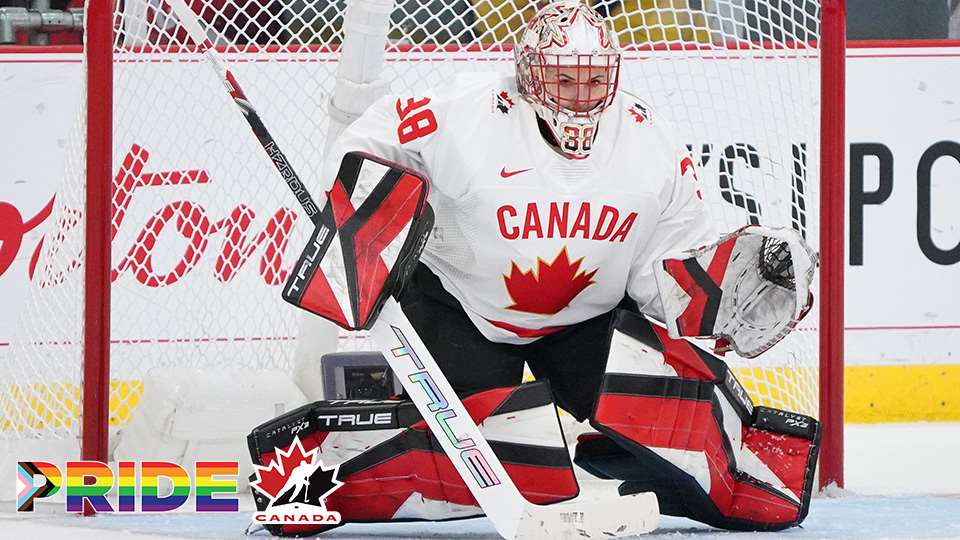
The National Women’s Team goaltender talks about life with partner Geneviève Lacasse, starting a family, being a trailblazer in the PWHL and the importance of being one’s true self
|
June 15, 2024
|
()
A few of our friends described it as a “hard launch.”
Geneviève and I decided not to officially “come out,” but instead we decided to just post the photos from our wedding last July. At that point, our friends, our families, our circle – the people who meant the most – all knew about our relationship.
We wondered if we needed to have a big coming out story. But we thought posting the photos of the day was a fun way of saying, “This is us. We got married,” like anyone else would post about getting married. It was time for us to just put ourselves out there and not be scared. There was so much love and support, and it was just so inspiring to see the effect we were able to have, just posting about our relationship.
We have a platform and influence, and we have people who follow our journeys. At the end of the day, those who support us will support us, and we want them in our lives, and we want to connect with them, but those who don’t, that’s all right.
We knew the impact we could have sharing our relationship and sharing our story; we knew there would be a positive impact, and we could help so many other individuals with their journey. And so maybe with age, there was some courage in telling our story, but we have all the support we need. So, for us, it was – how do we help others and support others now?
Going public was a huge weight lifted off our shoulders that neither of us recognized was there. And now I feel like we’re very open to having conversations, talking about our relationship and being our true selves. It’s been a rewarding journey. It was only a year ago, and it’s been so fun to just be out there and be us as a couple.
Geneviève and I started dating in 2015. I told my sister pretty early on about our relationship. Geneviève was the first woman that I ever dated. So, I also wanted to make sure that it was something, a longstanding relationship, before I told my entire family, which I would’ve done in any relationship that I was in.
I was in school at Harvard at the time, and so my teammates and friends at school knew early as well. And I knew I wanted to tell my family, but I wanted to do it in person. I didn’t want to make it a big deal, but I also know the norm in society is still, you’re heterosexual until you say otherwise. You have to come out and tell your story. I wanted to make it as normal as possible, but I also wanted to have in-person conversations with my family.
About a year after we started dating, I started telling my family. I told my parents one at a time. I went through my family. And I have a big family, so it was a lot of conversations. Being young, I was 20 years old, I was quite nervous about the conversations, but ultimately my family was so supportive– every conversation left me with ‘my family supports me and loves me no matter who I love.’ I know that’s not the case for everyone, but I am very fortunate to have a family that has my back no matter what. They were just happy I was in a loving relationship.
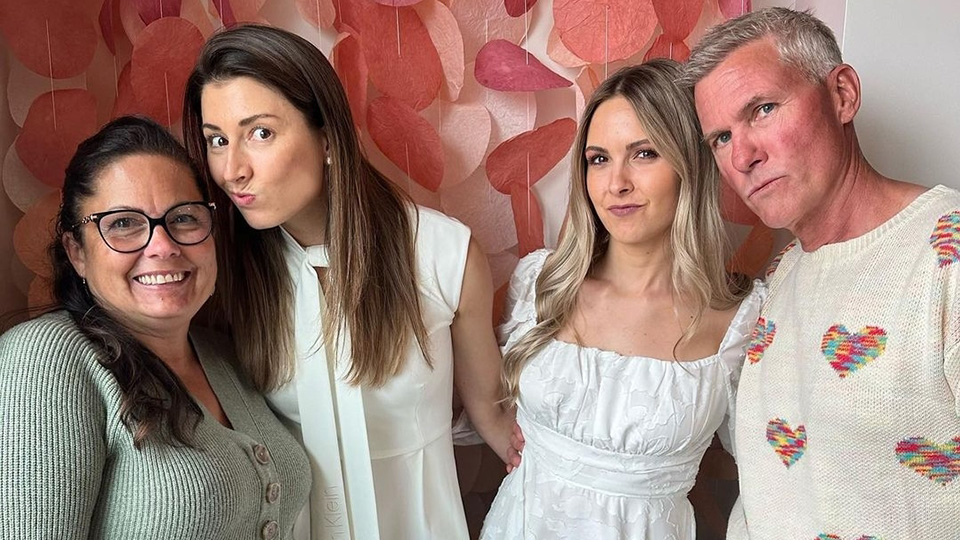
There were hesitations in coming out publicly, but it didn’t really have anything to do with our sexuality. It had everything to do with the fact that both of us were still active with the National Women’s Team, and we didn’t want our news to be about our relationship or our sexuality. We wanted it to be about hockey and our performance.
It’s certainly not easy when you and your partner share a profession. At the beginning, we had to say to each other that in many ways our relationship comes first, but we also have to put our own hockey first. And not in a selfish way, it’s more like… “If you do everything you can to make a team and to put yourself in a position to play, and I do everything I can to make a team and put myself in a position to play, then it’s not up to us. It’s up to the coach, it’s up to the scouts, it’s up to external factors.”
We were on the journey together, we were working hard and doing everything we could do individually, but when it came down to those decisions, we weren’t angry at each other. We could feel empathy if one played over the other, but at the end of the day, if one of us is in net, then it became, “Okay, I support you or you support me.”
We did have some bumps in the road along the way. I was released from the 2018 Olympics and she made the team. And then vice versa, in 2022, I made the Olympic team and she was released. This presented us with a big learning opportunity in our relationship. The first time around when I was released, we weren’t equipped with the skills to handle it. It was a big dream of mine to make that team and to play in the Olympics. And what do you say to your partner on either end, the one who makes it or the one who doesn’t? Navigating the situation and our dynamic was complex. We were supportive of one another, and to protect our relationship we felt that not talking about hockey was the best course.
The second time around, going into Beijing, we learned how to talk through it. We gained an understanding of how to have difficult conversations, to talk about how we feel. We wish that neither of those situations happened, but they actually made our relationship a lot stronger. We have acquired the skills to support each other and communicate through difficult situations, and recognize the importance of continuously practicing and refining those skills.
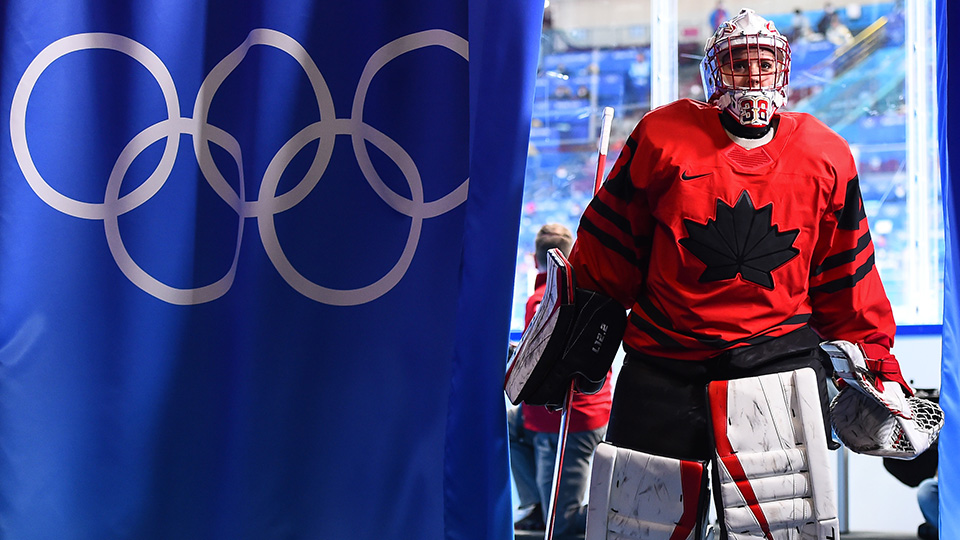
We found out we were pregnant in late 2023, a few months after we got married. We’re fortunate that we have friends that have gone through the fertility treatment process that we could use as a resource, and so we asked a lot of questions. We did a lot of research. We were living in Quebec, and luckily there’s funding to make the financial burden easier. Our journey to conception wasn’t long, and for that we are grateful.
It’s been quite a journey. We’re so excited to start our family and welcome our little boy to the world. It’s something that we had been wanting to do for so long, but having us both playing, it wasn’t really a possibility, especially without the salaries and security of a professional league. But now we’re finally in a position where I’m playing in the PWHL and Geneviève has security in her job as manager of corporate sponsorships and sales with the league. It’s the most security and stability we’ve had in a long time, and we’re excited to start our family.
We are looking forward to having our son grow up around strong women. And we know that he’ll grow up to respect women and look at women’s athletes as just athletes.
And I can’t forget the gender reveal! I was sitting on the bus with Emily Clark on a road trip this year, and we were chatting about doing a gender reveal, and just brainstorming some ideas. And then somehow it came up that it would be so fun to have an obstacle course and have the team involved. It evolved into Clark vs. Jenner, boy vs. girl, and went from there.
Geneviève and I gave them the link to the gender, because we wanted to be surprised as well. We set up one day after practice, and Clarky and Jenner, they came up with how the race would go. It turned out so good!
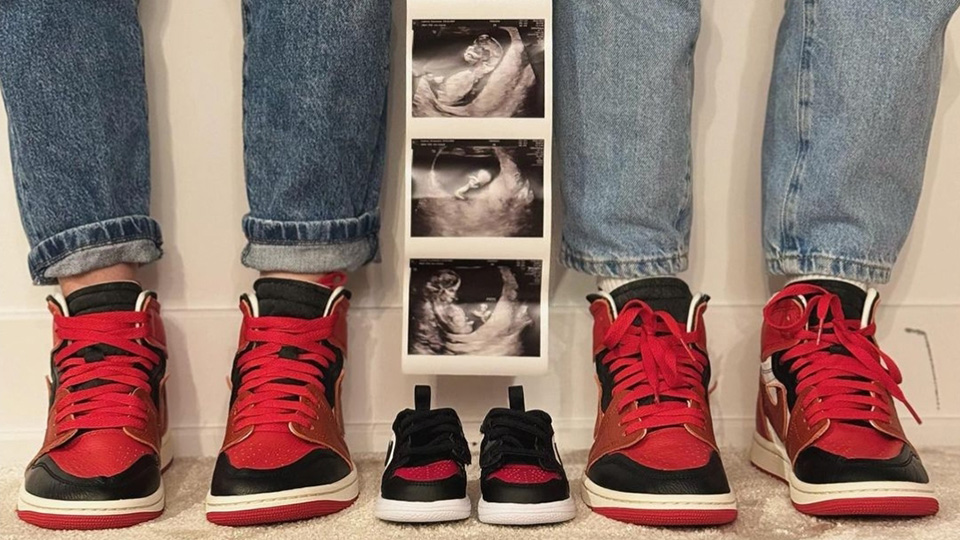
This year has been such a whirlwind. The wedding, the announcement of the PWHL, signing with Ottawa, finding out we were pregnant, launching the league, winning another world championship … hard to believe that’s only the last 11 months.
It’s been so incredible, the momentum that we have in the PWHL, the fandom, the support, the investment and the visibility. And just the growth that we’ve had within just our first season. Being a professional hockey player still feels surreal to me, but the pride I felt every time I stepped onto the ice with my teammates in Ottawa this season … it’s indescribable to be part of something so special.
Obviously, there’s still a long way to go for equity and parity, but we’ve made some huge steps in the past few years. Even in the grassroots now, there’s that ripple effect from the PWHL of getting women in sport and staying in sport.
At our games, I see young fans, not just young girls, but young boys too who just see us as hockey players. They don’t see us as women’s hockey players. They’re looking up to us like, “You’re my favourite player, you’re my favourite goalie.” They’re not saying, “You’re my favourite female goalie.” It’s been fantastic to see the shift in the mindset, and there are so many more stepping stones to come.
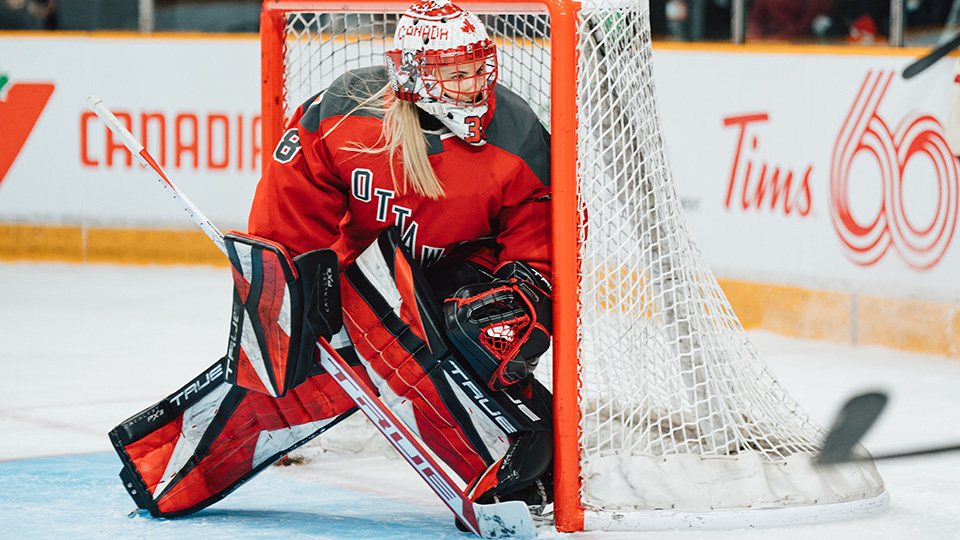
Because it is Pride Month, which means so much to me, I did want to end with a few thoughts.
Individually, everyone can look inward and see where they can do the work. I think often, people lead with assumptions when meeting someone. But we can all do a better job at letting them tell their story versus labelling them with, ‘You are this or you are that.’ It can be intimidating to be your true self because of preconceived assumptions.
Unfortunately, there’s going to be hate online. That’s unavoidable in the social media age we live in. But I think as much as we can, we need to hold on to the love and the support, and ensure the kind, loving, supportive voices drown out the negative ones.
As someone who’s in a same-sex relationship, I know that at times I can still be a little timid or discouraged to be my true self, but for those in our community, I encourage you to be as courageous as you can. Be your true self. If you come into a conversation and lead with your authentic self, it will start changing minds slowly. One person at a time.
We are moving in the right direction, and together is how we’re going to keep moving.
In my own words: Bayne Pettinger
The NHL agent talks about coming out, his work with Hockey Canada and making the game safer and more inclusive for the queer community
June 28, 2023
|
()
COVID-19 changed my life … in the best way possible. Strange, I know.
I was out to my family and close friends for a couple of years before the pandemic hit. But I lived in this world where I was running around, pushing deep thoughts to the back of my mind, saying, “I’ll deal with that later.” It was a fear of combining my personal life and my professional life.
But when COVID hit, I got to go home to Victoria. The world stopped, and so did my life as I knew it. The phone wasn’t ringing and the emails weren’t coming. The things that kept me occupied. It gave me the chance to sit down and have honest conversations.
I remember talking to Tyson Barrie, who was a client of mine and a good friend going back to our days growing up on Vancouver Island, and saying, “Hey, you know what? I think I’m going to come out.”
I thought maybe I’d just do an Instagram post, something simple. But Tyson and some other important people in my life thought I could really do something impactful, that I could be a face for the queer community in the game, because it was something hockey desperately needed.
So that started my journey. I began coming out to others, to big names in the game who I had crossed paths with through the years. When I told Connor McDavid, his response was simply, “Okay, that doesn’t matter.” I got a text from Sidney Crosby, who congratulated me and let me know he was there if I ever needed anything.
On Nov. 5, 2020, with the help of an article in The Athletic by Pierre Lebrun, I came out publicly.
Without discrediting how important my coming out was for my mental health, nobody really cared. It didn’t change how the hockey community saw me. Instead, it was … “Hey, you’re Bayne. You don’t judge us on who we date or who we’re attracted to. So why would we judge you?”
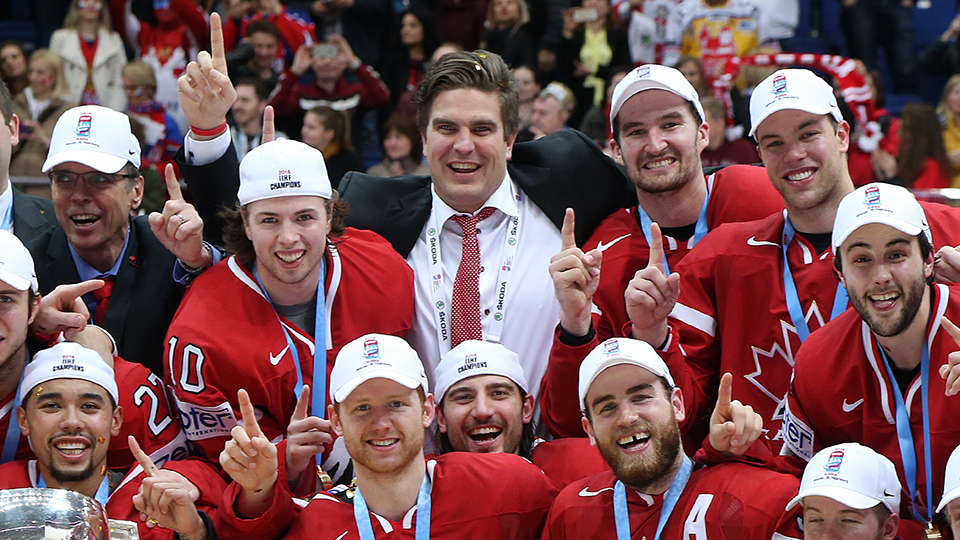
I got my foot in the door with Hockey Canada as an intern in the finance department in 2009 (I’m not much of a numbers guy, but it was the only position available at the time). From there I joined the hockey operations department in 2011, and my first assignment was the 2012 World Juniors in Alberta. I was travelling the world with Team Canada, riding these highs of winning gold at the Olympics, the IIHF World Championship and the World Juniors. And I was hanging around with a who’s-who of hockey, whether it’s Doug Armstrong, Jon Cooper, McDavid or Crosby. I left Hockey Canada in 2019 to become a certified NHLPA agent with CAA (Creative Artist Agency) and relocated to Toronto, finding my niche in the game and my personal happiness.
But there was always this fear that I couldn’t live my true life – to be accepted as a gay man – and also be a successful young executive in the game. It was a conundrum that kept me in the closet for a long time.
And it was that fear I needed to break down. It’s human nature – you always think the craziest things are going to happen, right? You’re going to tell someone and they’re going to not be your friend anymore. You get these thoughts in your head that you won’t be accepted or pushed out of hockey for some reason.
But that’s not what happened.
When I look back, I wonder why I was so anxious. And that’s what I try to preach to people who have reached out that are still in the closet thinking they won’t be accepted. The amount of outreach I had from people around the world, in the hockey world specifically, saying, “Hey, great for you. That’s awesome. You’re going to do great things,” was amazing. Just the overall support from friends, family, and even strangers was surreal to say the least.
And by no means did I ever think I’d become a face of being a queer man in hockey. But once I crossed that threshold and people reached out, I’m happy to speak on it. I think it’s important because you have to be out there and not everyone has the voice or platform to speak up.
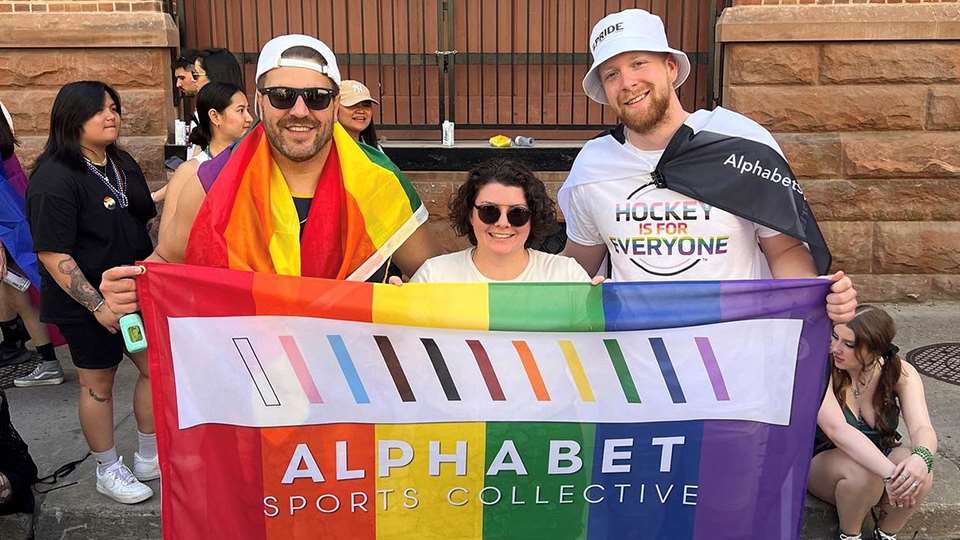
That’s one of the reasons I helped launch the Alphabet Sports Collective (ASC) in March. We are a queer-led, not-for-profit that is empowering queer youth. Working with my co-chair, Brock McGillis, and ambassadors like Gord Miller, Jon Cooper, Morgan Rielly, Tessa Bonhomme – the support has been absolutely amazing.
We want to get our community to feel good about themselves. So if they want to work at Hockey Canada, or they want to be a sports agent, or they want to play in the NHL, now they have those faces, those supporters. Because I’m a strong believer that if you’ve never seen something done in front of you, you can’t tie to that and see yourself in those positions.
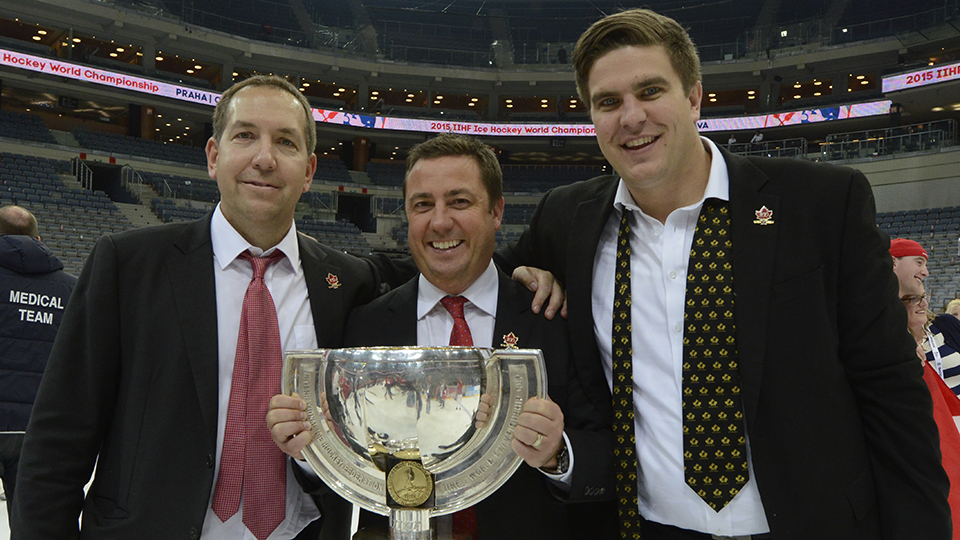
I’ve kind of come full circle now and I’m working with Hockey Canada as part of their ED&I (equity, diversity and inclusion) Task Team. I’ve really enjoyed it. I think it’s important to have representation from all walks of hockey.
For me, the key is showing vulnerability. Hockey Canada needs to get out there and listen to the issues and not think it has all the answers. We can write all the policies we want, run all the seminars we want. But we have to get to the grassroots of it. We need to hear the voices of the community, and there are groups out there that have done the work and understand the issues at hand. We don’t need to reinvent the wheel – we need to listen and learn.
I’m really proud Hockey Canada has this new group and it is listening and taking notes and not just rushing out a statement. Anyone can put out a statement. Let’s actually learn and implement new procedures and training so we’re not just spinning the wheel and checking the box. That’s the goal.
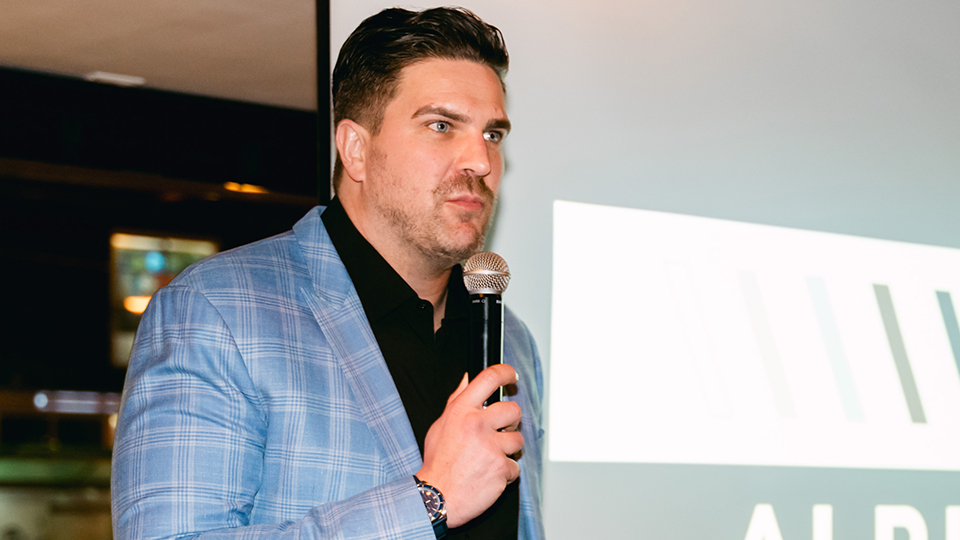
So now for the million-dollar question – where do we go from here?
I think it’s representation. To get the queer community empowered and feeling good about themselves, and then get a member of the community on the Hockey Canada board, get members of the queer community on NHL boards, get them on minor hockey boards, get them coaching, get them as trainers. To get that representation at the governance level, to have that voice and have that perspective, that’s the ultimate goal. Every community needs to be represented. People of colour, people of different religious backgrounds, people of the queer community. Because that’s what makes up Canada. So, if we’re really going to have a board that represents our country, then we need to have a queer seat there.
I want to get it out there and have open conversations and try and educate and humanize, but we’re not going to change everyone’s minds, and that’s not what we’re trying to do. We’re trying to say that the rights that you have, the equality, the celebrations, we want that for queer people.
I think sports are behind the rest of society. If I worked at a bank, I wouldn’t even really have to come out. It’s a big deal in hockey because there has never been anyone that’s done it, and it’s a hypermasculine sport, and we don’t talk about our feelings. We just play hockey and it’s the crest on the front, not the name on the back. Don’t bring your personal problems here – that’s how I was raised in the world of team sports.
But I think with some of the things we’ve seen in the news recently surrounding Pride nights, we’ve actually broken that down a bit and had honest conversations and opened people’s eyes that this is still an issue, that there are still some bigoted views and that it’s not a safe place for everyone yet.
The latest from last week, that NHL teams will no longer wear pregame jerseys for any causes, is disappointing to say the least. Nobody seems to want to focus on the 700+ players who supported our cause and wore Pride jerseys last season, it’s all about the miniscule group that refused. Pride nights (not to mention Hockey Fights Cancer, military appreciation and Indigenous celebrations) were successes across the league, and it’s sad to see the decision that was made.
With all that said, I truly think change is coming, and it starts with our youth.
I coach a U14 minor hockey team in Toronto. When I came out to them, their response was, “Whatever.” It didn’t change anything with them. When I came out to some of my young clients, it was, “It makes you happy and we’re happy for you.”
They’re understanding, they’re compassionate and they really don’t care, but in a good way. A lot of people seem to have a poor opinion of millennials – that they play too many video games and they’re lazy and the old “back in my day, I didn’t do that” mantra. But we’re at a point where the next generation is so eyes-wide-open and accepting that I find the future really promising, and I really think we’re in good hands on diversity and inclusion with our youth coming up.
To finish, I want those that are struggling to know that they’re not alone. There are resources, and there are people to talk to to help you feel accepted. It’s human nature to focus on the negatives, but there are a lot of us trying to break down barriers so queer people feel comfortable working or playing sports and living as their authentic self.
I would never want to be pushed away from the game I love because of sexual orientation. And I thought that was the case for a while, but it’s been the exact opposite.
Who knew? The big, bad hockey world isn’t that big and bad after all.
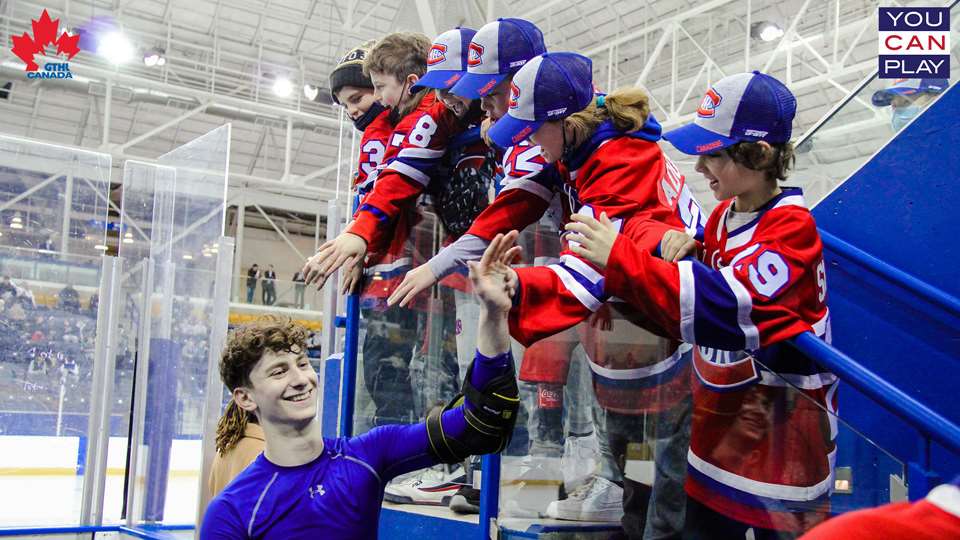
Inclusion not exclusion: The GTHL and You Can Play
Nearly a year after partnering with You Can Play, the Greater Toronto Hockey League remains more committed than ever to creating a safe space for 2SLGBTQ+
|
June 23, 2023
|
()
Last August, the Greater Toronto Hockey League (GTHL) entered a three-year partnership with You Can Play, a non-profit organization that works to ensure the safety and inclusion of 2SLGBTQ+ athletes, coaches and officials in sports, including hockey.
Since then, You Can Play has provided inclusion training to the GTHL Board of Directors, staff, coaches, athletes and others, reaching roughly 300 participants in the game. The GTHL, the world’s largest minor hockey organization, has also worked to highlight You Can Play in its social media efforts and leaned on it for support in participation in events such as the Pride Parade.
Scott Oakman, executive director and chief operating officer with the GTHL, talked to Hockey Canada about the partnership with You Can Play and the impact it has had on the organization.
Hockey Canada (HC): Why did you decide to partner with You Can Play?
Scott Oakman (SO): Our strategic plan was developed and released in early 2022, and then an independent committee report we had done on racism and discrimination identified that we should be putting high priorities on partnering with organizations that represent underrepresented communities in sport. You Can Play is a great example of one of those organizations ... that we've partnered with to help us learn and educate all our stakeholders from our board right through the staff and people within the GTHL on the particular issues facing the LGBTQ+ community.
HC: What are some of the areas the GTHL has focused on in the first year of the partnership?
SO: Our relationship with them is kind of multi-tiered. We have education pieces, we have celebration pieces, we have policy review pieces and You Can Play have been an excellent partner for us in terms of helping us better understand how we can change our organization and educate people to make sure that everyone feels welcome.
We really focused on organizational leadership in the first year. We're looking at doing things with You Can Play leaders so they can start to educate people within our individual organizations on how they can have a positive impact.
HC: What kind of impact has You Can Play had on the GTHL? SO: They've created a comfort level where we are not intimidated to ask difficult questions and they're prepared to give us straight and honest answers. As that comfort level grows with organizations and teams, I only see us having greater success with them.
We have a resource where when [a team within the GTHL] faces challenges, they can call You Can Play and get advice. It has been tremendous and we're now trying to spread the word further among the organization that these resources are available for them to take advantage of.
HC: What has the response been from players, coaches, officials and others?
SO: It's been incredibly well received. We've had situations where teams have run into some challenges internally and You Can Play has gone in and supported them. I think that's been replicated in a number of instances with some of the work that You Can Play has done one-on-one with some of our teams and in the collective education work that they've been doing with us.
HC: What are the next steps for the GTHL with regard to You Can Play? SO: We certainly want to trickle the education down. Staff have been through a bunch of stuff this year with the ongoing education. We are starting some team-based proactive education, as opposed to reactive after something's happened. The bigger challenge will be how we can roll out, on a larger scale, the education that's available through You Can Play to be able to capture on an ongoing basis, all our participants, so that it is not just a box that gets checked. We want to provide education on an ongoing basis in a format that isn't overwhelming, where it isn’t all front-loaded, and it's more ongoing through the course of the season and small touch points.
We are trying to stick handle a way to have positive communication, reaching all our participants on an ongoing basis, so they are better positioned to understand the issues that are faced [by 2SLGBTQ+] and ensuring that people on their teams are creating a welcoming environment and a safe environment for everyone.
Heidi Johnston, sports partnership manager with You Can Play, also talked to Hockey Canada about the work it does, why it matters and its relationship with the GTHL.
HC: What is the overall goal of You Can Play?
Heidi Johnston (HJ): Our mission is around creating safety and inclusion for the LGBTQ+ community and we do that mainly through education. We also participate in a bunch of pride events, and parades. We also work with the NHL to promote their Pride Month.
HC: Talk about You Can Play's education work; what do you do with teams and players?
HJ: A part of what we do is educating the coaches who have the most direct impact and connection with their kids and players. It's things like how to deal with a kid that might come out. Our training for the entire team is about the importance of pronouns, the importance of people being able to express themselves however they want and that your teammate is your teammate no matter what.
We also do activities that are helpful for the players to engage and one of those things is creating a logo around who they are as a person. The goal is for everybody to see that we are all different and logos are all different and it is that diversity that makes communities, especially hockey, great.
HC: What is your relationship with the GTHL?
HJ: Our relationship is really based on around education. We provide a lot of education for the league, for coaches, for refs and when an incident does come up, we will intervene and then provide training for that specific team or group of individuals. We have done six or seven team training in the eight months I've been with You Can Play. We've had an opportunity to educate 20 plus players with parents in such a short time and we've also done very large ref training and training with the coaches.
It's an incredible partnership because of how dedicated they are to really wanting to make change. Having a group the size of the GTHL, really committed to creating diversity to creating safe spaces, you know, for their coaches, their players and their staff is incredible. We are able to magnify our impact by having a partner like the GTHL.
HC: Why is the work you are doing important? Why does it matter?
HJ: LGBTQ+ kids have the highest incidence of suicide, and the research suggests that 83 per cent of fans who are openly gay don't feel safe as a spectator and 86 per cent of LGBTQ+ say they don't play a sport at school. So, it matters from an acceptance perspective. Every kid should be able to play and have the opportunity to be part of a team. Sports should be for everyone and anyone who wishes to participate regardless of gender or sexual orientation.
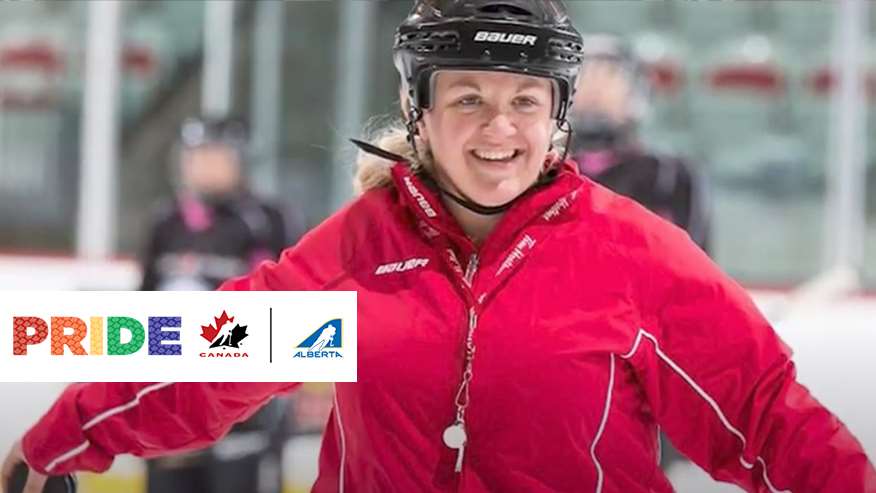
Continuing to be better
As manager of athletics at Olds College and member of the LGTBQ+ community, Trina Radcliffe is working to instill the values of giving back to all Broncos athletes
|
June 29, 2022
|
()
Trina Radcliffe’s life has come full circle as the manager of athletics at Olds College.
The positive impact she’s making on students goes beyond athletics, as she works with the college to make it an inclusive and safe space for all.
When you arrive on campus at Olds College, you are welcomed by three flags flying proudly across the Alberta skies. Throughout the month of June, the red and white of the Canadian flag is anchored by the blue of the Alberta flag on one side, and the rainbow colours of the Pride flag on the other. It signifies the welcome, inclusive and safe space the institution is working to provide its staff, students and community.
Over the last decade, Olds College has worked to develop its Broncos athletics program, expanding to include basketball, volleyball, futsal, rodeo and women’s hockey. The growth that Broncos Athletics has seen over the last five years can be credited to Radcliffe and the team she has built.
Radcliffe, originally from Oyen, Alta., is a product of her small-town roots. She grew up playing baseball and school sports, not because she was a standout on the court with her 5-foot-2 frame, but because the school needed her to have a team. In the winter, she could be found on the backyard rink built by her dad where she learned to play hockey with her three brothers. It wasn’t until she was 13 that she finally got to lace up for organized hockey. An hour away in Hanna they were starting a girls’ program. And as the story goes in small-town Alberta – they needed everyone to have a team.
“There was everything from nine-year-olds to 18-year-olds on that team. I was in the middle at 13 years old and loved the experience of playing hockey with girls,” says Radcliffe. “I’d always played hockey, but never got to play organized, just on the pond, so getting to play organized hockey for the first time was such an incredible experience.”
It was a twist of fate that led to a goaltending career. Radcliffe, who had played defence until then, was first in line to strap on the pads when the team’s goaltender got hurt. She was a natural between the posts and made the transition to goalie. It was a decision that paid off when she became the first goaltender for the women’s hockey team at Mount Royal College (now Mount Royal University) in the Alberta Colleges Athletic Conference (ACAC).
Taking the lessons she learned as part of a start-up team in small-town Alberta, Radcliffe applied the same techniques to starting the team at Mount Royal.
“You just go and talk to as many people as you can and convince them that it might be scary, but come out and give it a try,” offers Radcliffe. “Myself and my coach, Chris Dawe, were putting up posters saying, ‘Come try out,’ We had ringette players, we had people who had never played hockey before, who had only public skated before, could barely skate when they came to try out. We played in the intramural league, wearing the men’s old jerseys. We played until midnight some nights and then we played in exhibition tournaments with Augustana, Red Deer and Grant MacEwan, so that was kind of the start of women’s ACAC hockey back in 1998.”
Her role in starting the Mount Royal women’s team led Radcliffe to her next transition – from player to administration. During her last season with Mount Royal, she was coached by Shelly Coolidge, who was also the female development manager at Hockey Canada. Whenever Coolidge needed volunteers, Radcliffe was there. Because of the network she had built, Radcliffe eventually earned a full-time position with Hockey Canada as the female development coordinator before moving into the manager position.
In 2015, Radcliffe made the move to Olds College. She saw the move as a return to her small-town roots, but with the opportunity to stay connected to the network she had built over years of volunteering.
“I got to know people,” says Radcliffe. “Just building that network and volunteering. That’s still what I tell everyone. Just build your network, don’t worry about getting paid for everything that you do and volunteer. That’s basically how I got every job in sport since then.”
Radcliffe grew up in a family that gave back to the community through volunteering. Reaping the rewards of her own experiences, Radcliffe has asked the Broncos to give back and be involved in their community.
“We’ve seen our Broncos women’s hockey team coaching minor hockey teams, going out to schools and skating with the physical education programs and we’re seeing them in all of the Hockey Alberta camps as team leaders and assistant coaches. So that’s one of the things I’m most proud of,” Radcliffe says.
Broncos athletes spent over 3,700 hours in the last year volunteering in the community. Radcliffe has recognized that it’s a struggle for most organizations to find volunteers right now, but that struggle creates opportunity for student-athletes in Olds.
“It honestly is such an important part of who we are. It’s engrained in our student-athletes. They’ll come to me now and [ask] who needs help. Who needs help in the community? Pretty much anything, we want them out there. My number-one goal is to help our student-athletes grow as people and to provide them opportunity. [Volunteering] was the best way for me and I want to instill that in them.”
Radcliffe’s work at Olds College has not gone unnoticed. In April, she received the Colleges & institutes Canada Leadership Excellence Award for Managerial Staff. The award acknowledges her work to create a collaborative, welcoming team that makes a positive impact on students, while doing it under the strategic plan of the institution. The support Radcliffe feels from her team, leadership and the community is what encourages her to be creative and collaborative.
The support from the community is what has encouraged Olds College to establish the Gay Straight Alliance (GSA) in 2019 and an Equity, Diversity and Inclusion (EDI) Committee. The GSA is composed of faculty, staff and representatives from Olds High School, with Radcliffe playing an instrumental role in their development.
“Olds High School is actually the ones who taught us how to implement a GSA at the college because they have such a strong GSA group at their high school,” says Radcliffe. “It just started as staff as allies. It has taken us four years for students to feel comfortable to say ‘Yeah, I’m an ally. I’ll come and be a part of the GSA.’ So, it’s been huge steps and that’s the goal, is that the GSA should be student-led.”
Radcliffe is a member of the LGTBQ+ community and the EDI Committee. Currently, the college is working on safe-space signage for offices. In addition, there are 27 gender-inclusive washrooms available on campus, two Pride flags flying high and an EDI webpage complete with resources and directories for Indigenous students, people of colour and the GSA.
“I think everyone is trying to achieve the same thing,” Radcliffe says, reflecting on the progress she has led. “Whether it’s in sport, EDI, the registrar’s office and recruitment of student-athletes, everyone is trying to be better and do better.
“Being able to represent the LGBTQ+ community here, we’re working on painting a crosswalk on campus as well. The town has supported us. The town has gotten behind and sat on our EDI Committee as well. And I think that’s all important.”
Although June marks Pride Month across the country, the efforts to be better do not end on June 30.
“You have to be repetitive with it,” Radcliffe says. “So every year when we start our registration process for our minor sports leagues, every year when we do the initial team meetings, we talk about how we are going to be kind, how we are going to treat each other with respect, how we will not tolerate bullying on the basis of the colour of the skin or gender or sexual identity or any of those things and it has to be on the forefront all the time. But we have to be repetitive about it. We have to always talk about it.”
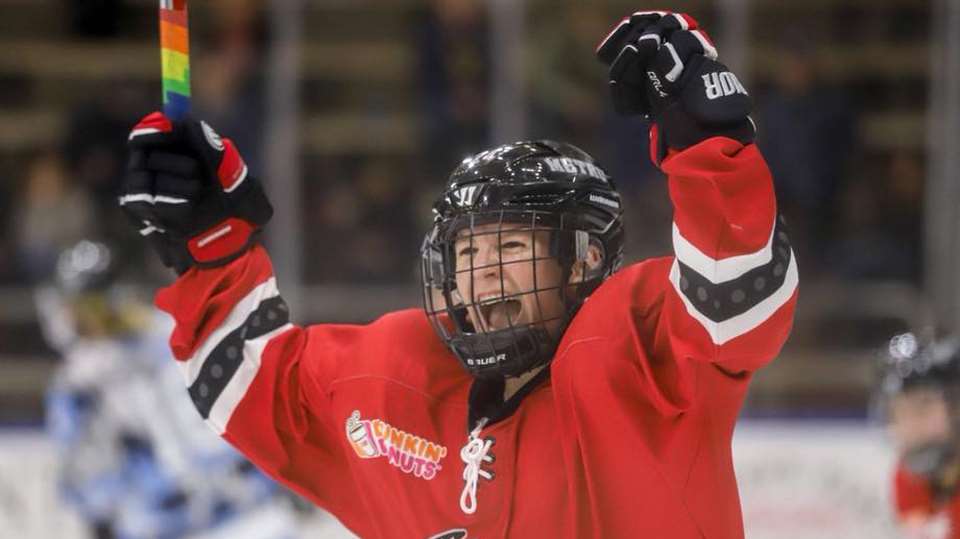
The power of visibility
A Team Canada alumnus, Isobel Cup champion and transgender advocate, Harrison Browne is using his platform to educate the hockey world and beyond
|
June 17, 2022
|
()
Hockey provided Harrison Browne with an opportunity to feel openly comfortable. It also granted him a voice to proudly discuss his journey.
Even in retirement, his message and leadership are important and welcomed, likely even more acoustically today than when he played.
“I wouldn’t be where I am today without hockey,” says Browne, a two-time Isobel Cup champion with the Buffalo Beauts of Premier Hockey Federation (PHF). “I wouldn’t be who I am and have the platform I have without hockey.
“Hockey was the first place that I felt comfortable to be myself and a place that I cultivated relationships where I felt supported and could trust people with my identity without judgment.”
As a transgender person and former athlete, Browne appreciates the forum he now possesses to talk, promote – and especially educate – about LBGTQ+ issues and acceptance.
It’s a podium that today permeates beyond hockey and into mainstream society.
“I didn’t set out to be an activist,” he says. “But then I saw the impact of trans visibility and LBGTQ+ visibility and I felt a responsibility to speak out, be vocal and visible to help anybody that can’t be visible like I can.
“I get very protective over my community so, yes, I do now consider myself an activist.”
Since June is Pride Month in Canada and across the world, it is widely used as an opportunity to support and celebrate LBGTQ+ people through parades, dances, festivals and other events.
For Browne, Pride Month is all of that and more.
“It’s about celebrating how far we’ve come and recognizing how far we need to go,” says the Toronto resident. “June is a great reminder of how strong this community is and how supportive we all are of each other.
“And it’s a great way to celebrate who you are as a person.”
Growing up in Oakville, Ont., Browne began playing hockey when he was nine years old, a “geriatric start” to the sport in his own words.
Regardless of when it commenced, it concluded as a solid career that lasted 16 years and included playing for Team Canada at the 2011 IIHF World Women’s U18 Championship and four years of college hockey in the United States, the last three on scholarship at the University of Maine.
From there, his time in the professional ranks stretched over three seasons in the PHF (known then as the National Women’s Hockey League), two with Buffalo and a final campaign in 2018 with the Metropolitan Riveters prior to retirement.
During his entire professional career, he was the first openly transgender athlete in a team sport.
Now 29, Browne has shifted his focus to public speaking and a vibrant acting career, both of which are conduits for trans and LBGTQ+ visibility and advocacy.
“I’ve been very fortunate,” he says. “After I retired from the game, I’m still a voice that people look to in the hockey community. I kind of meshed it with my acting. To be able to have those two worlds align, I certainly feel like I have a voice. And it’s something that I don’t take lightly and I’m very proud of.”
Browne’s appearances include celebrity hockey games and functions, keynote speeches, Scotiabank television commercials and an appearance in an episode of The Last Man, a TV drama series based on the comic book set by the same name.
By his own admission, Browne’s new career and schedule doesn’t permit much time for recreational hockey, something he laments.
However, he will always cherish the game for what it provided prior to his coming out, but especially after he did in 2016.
He said the PHF, its fans and teammates were extremely supportive during his social transition in what also became a pivotal period for LBGTQ+ inclusion in sports.
“They all helped me embrace who I am,” says Browne. “When I came out through hockey, I felt being visible helped a lot of people and the hockey community really helped me.”
Browne believes women’s hockey has been instrumental in inclusiveness, acceptance and a beacon for other sports to follow in pursuit of LBGTQ+ visibility and equality.
“The women’s side is exemplary on how other sports and society as a whole can include the LBGTQ+ community and celebrate people for their differences,” he says. “And to look at people simply as teammates.”
What does concern Browne in this month of celebration are some additional barriers that restrict further progressive movement for the LBGTQ+ community.
The recent influence of “non-inclusive” bills and legislation across North America has created some deep concerns.
In some jurisdictions these laws or bans specifically hinder younger LBGTQ+ people from playing sports and that is a step backwards in our society, according to Browne.
“It’s unfortunate that it comes with people having to fight back, but I have seen a lot of progress in the last five years.
“We’re in a moment right now where we’re fighting for our place, but I do see a lot of hope.”
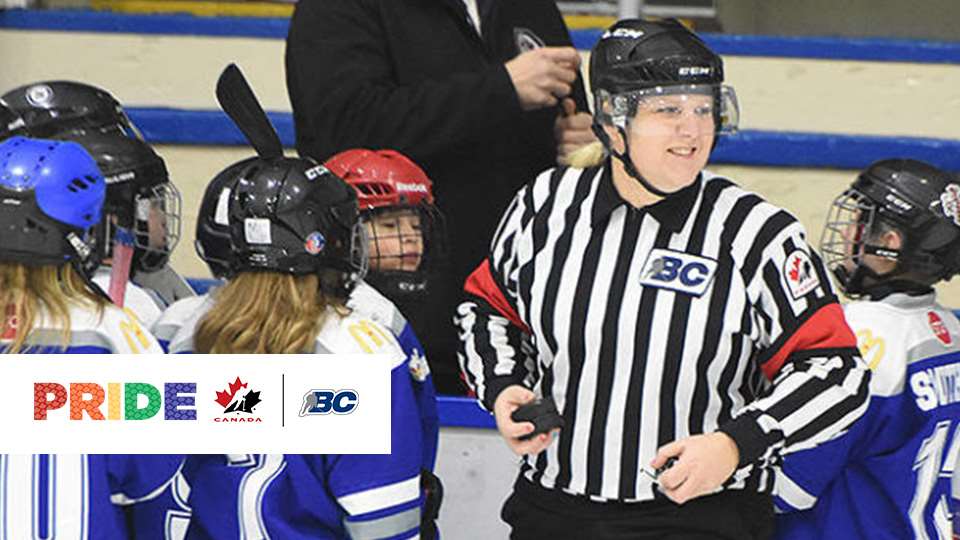
With pride and authenticity
After transitioning in 2018, Dee McWatters is working to create a safe and comfortable space for other transgender members of the hockey community
|
June 10, 2022
|
()
For Dee McWatters, pride comes with respect, honour, determination and – most of all – acceptance.
The Summerland, B.C., minor hockey official and adult-league goaltender opened up to her community and world as transgender in 2018, announcing her intentions of transitioning from male to female.
As an official in the Penticton Minor Hockey Association and part of a women’s team, hockey has helped McWatters through her challenges.
“It’s beyond me,” she says of being readily accepted. “Let’s face it, sometimes the game has its male-dominated machismo, and it’s not the most comfortable place to come out.
“I remember what locker-room talk was like [when] I was a teen. It was a different era, but now my kids have spent time coaching and are the ones in the dressing room. Now they have the opportunity to be the influence in the room to provide that safe environment. It’s about sharing the game, allowing people to be diverse and be themselves.
“That future McDavid Gretzky or Ovechkin – it’s possible they may have come and gone because they left the sport at 14 because they just felt this is not a place where [they] feel comfortable,” McWatters, 48, says. “That would be a shame if that has happened. There shouldn’t be anyone who leaves the game because of how they may identify. They should be welcomed. We’re getting closer.”
McWatters, who also works as an operations manager with Time Family of Wines, now works to build a comfortable space for other transgender athletes.
After she came out to herself five years ago, McWatters remembers sharing her transition with the rest of her hockey community.
"aAt the time, I was doing more coaching and officiating in Summerland. I let the association know what I was going through with my transition, to not let it affect anything with my coaching and make sure they had my support, because they’re supposed to support me.”
She was officiating and not playing at the time.
“As a goaltender, I wasn’t really big on regular men’s beer league. I enjoyed refereeing it. It was good exercise and I made a couple of bucks. Then a few years ago I [officiated] a few games in the South Okanagan Women’s League and at the wind-up party someone asked me if I still played.
“I said, ‘Not really, I do coach and it’s been a while since I was in the net.’ And they were like, ‘You’re a goalie? That’s even more important.’ I said, ‘Well I’m not fully female yet.’ They said, ‘Yes you are. You identify as a female. Totally, yes, you’re one of us.’
From there, McWatters rediscovered her love of the game as a player, joining another team in the fall of 2019.
“only one of the girls knew me and they were like, ‘Who’s this new goalie we’re trying out? She’s awesome. Is she staying with us this season?’ I was just fully accepted as one of the ladies playing the game and I loved it.”
That’s when McWatters also found out about an all-transgender team competing in Boston, playing a weekend of games facing Boston Pride’s gay hockey team, with another event planned in Madison, Wisconsin the following year.
“I wanted to go to [Madison] and I raised some funds to go and had so much support that I turned it into a fundraiser for local youth LGBTQ programs. Then the [COVID-19] pandemic hit and Madison did not eventually happen. Hockey took a turn for a season and life went on,” she remembers.
“Things started lifting last year and I held another fundraiser and supported five different youth organizations, two local high school bursaries and donated money to Team Trans North America, to help fund those who otherwise couldn’t afford to go to one of our tournaments.”
She eventually competed in Wisconsin last year, playing at age 47, and was encouraged by seeing young athletes in their 20s being able to play the game they love as their authentic selves.
McWatters’ inspiration turned to action as she approached BC Hockey about developing an educational program to promote more diversity and support for hockey associations.
She was recently involved in a Zoom meeting with Kamloops Minor Hockey where a friend of hers is on the executive.
“They have a player [and their] family going through transitioning, and they want to make sure they have all the proper pieces in place to support the player and family so that they can move forward,” says McWatters, who was more than willing to help.
“That’s what I want to do, make sure no one leaves our game. They enjoy playing the game and they shouldn’t be pushed out because they’re uncomfortable as a person, whether they identify differently or whether their sexual orientation or preferences are different. It shouldn’t matter as we’re all just here to play this wonderful game of hockey.”
She also officiated at the girls’ provincial U15 tournament in Kelowna.
“I had the support of the Penticton Minor Hockey referee-in-chief to attend, but it was more that I wanted to show some visibility and spread the message that there are people like me in the game,” McWatters says.
“I am very visible. I never forget that I’m there to officiate, but I also want people to see who I am so that there might be some identifying young player or coach or fellow official that sees me out there and realizes, ‘I can be me and still stay in this game that I love.’”
In a sport she has adored since she started at eight years old before taking up officiating at 12, she now hopes to be a role model; McWatters encourages people to ask questions how they can support players in a similar position.
“I have gone through many steps, from accepting who I was, to others accepting, to my social transition, to my medical transition,” she shares. “I have gone through hormone replacement and gender reassignment surgery. That’s not the end-all, be-all for everybody. That was my choice. But I live every day completely and authentically as the female that [I] was meant to be inside.”
Mario Annicchiarico is a freelance writer based in Victoria who has previously covered the National Hockey League’s Edmonton Oilers, as well as the Western Hockey League.
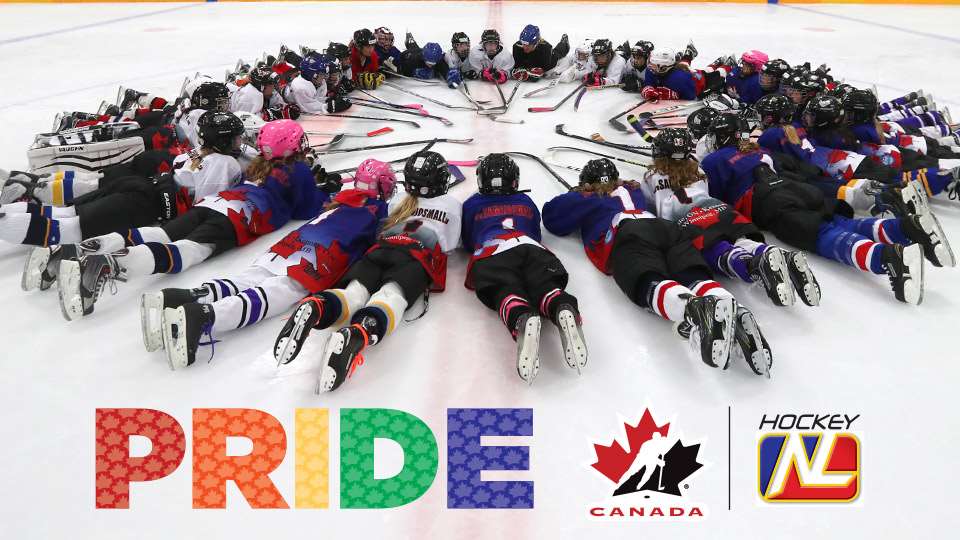
Making a statement
Hockey Newfoundland and Labrador’s mission is among the first in the country to focus on inclusion
|
June 9, 2021
|
()
Safety. Fun. Inclusion. Of the three pillars in the Hockey Newfoundland andLabrador (HNL) mission statement, one is sending a distinct message to anyone who wants to get on the ice.
“We wanted to get anyone in, who wants to come in, and play,” says Dr. Jared Butler, HNL vice-president and chief medical officer.
“If you read our mission statement, inclusive is alongside safe and fun and we think that’s three key things in growing the game,” says HNL executive director Craig Tulk. “Our whole focus and value is growing participation that is inclusive.”
The mission statement – To foster a safe, fun, inclusive hockey experience – was adopted in the spring of 2020. Tulk said the intention is ensure everyone, regardless of gender, ethnicity, disability or skill level, feels welcome on the ice anywhere in the province.
But the idea to include inclusiveness in the mission statement is linked to the HNL Trans Inclusion Policy, written by Dr. Butler in 2019.
“It was about trying to set a trend and set a marker for people to recognize that we need to be more inclusive and we need to have everybody involved in the game,” says Dr. Butler. “Hockey is Canada’s game and there’s no reason why, as someone whose gender identity is different from what they were born with … can’t participate.”
Dr. Butler cares for a variety of patients through his family and sports medicine practices in central Newfoundland and said he was inspired to create the policy after working with a patient through a difficult journey to find his own identity. He consulted with the young man’s parents, a child psychologist, a physician specializing in trans-medicine and a trans-athlete over the course of two months while writing the policy.
“Getting a kid involved who otherwise might not want to be involved and involved where they feel they want to play and who they want to play with, that’s the most important thing,” Dr. Butler says.
“[We want to be] able to let the public know players have the opportunityto participate in our programming in what’s comfortable for them,” Tulk adds.
The Trans Inclusion Policy provides details on athlete eligibility, a dressing room policy and implementation guide. But for Dr. Butler and Tulk, the most important role the policy is playing for HNL, is spreading the message everyone is welcome.
“We’re proud to this stage, but we’ve got a lot more work to do and we’re looking forward to it,” Tulk says.
“To think [athletes] can just go to the rink and play with who they want to play with and not think about it and for us to be that safe haven is just outstanding,” Dr. Butler says. “For me, that’s what it’s all about. If kids are happy and they’re enjoying the game and they’re getting to make friends, then this was all worth it.”
For more information on the Hockey Newfoundland and Labrador Trans Inclusion Policy, please visit HockeyNL.ca.
For more information: |
October 1, 2026
October 1, 2026
September 29, 2026
September 28, 2026
May 4, 2026
July 8, 2026
May 7, 2026
Shannon Coulter - May 29, 2026
Shannon Coulter - May 30, 2026
Photos
Videos
2026-27 NWDT: USA 5 – CAN 2 (Game 3)
2026-27 WU18: USA 5 – CAN 4 (Game 3)
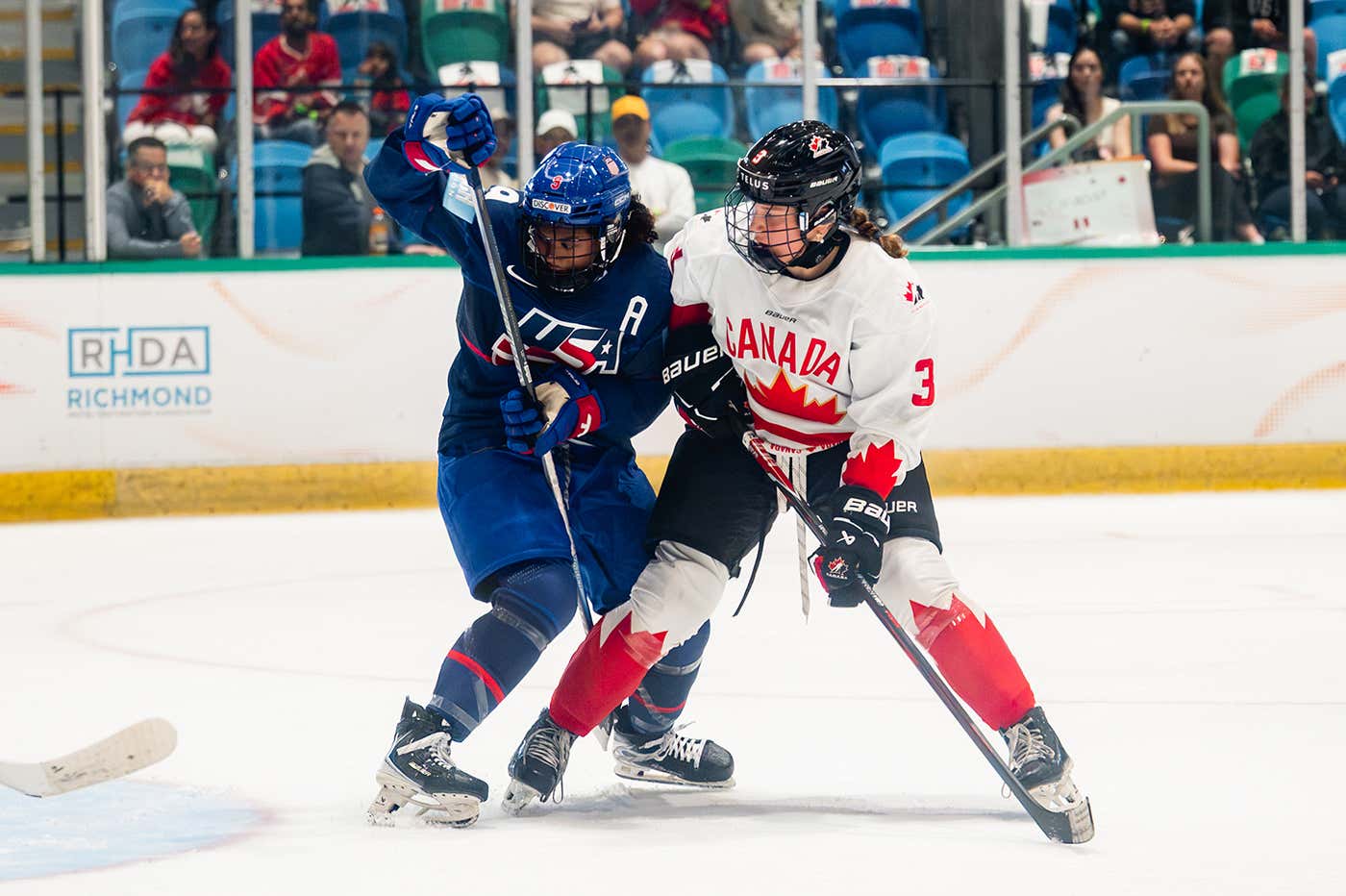
2026-27 WU18: CAN 5 – USA 1 (Game 2)
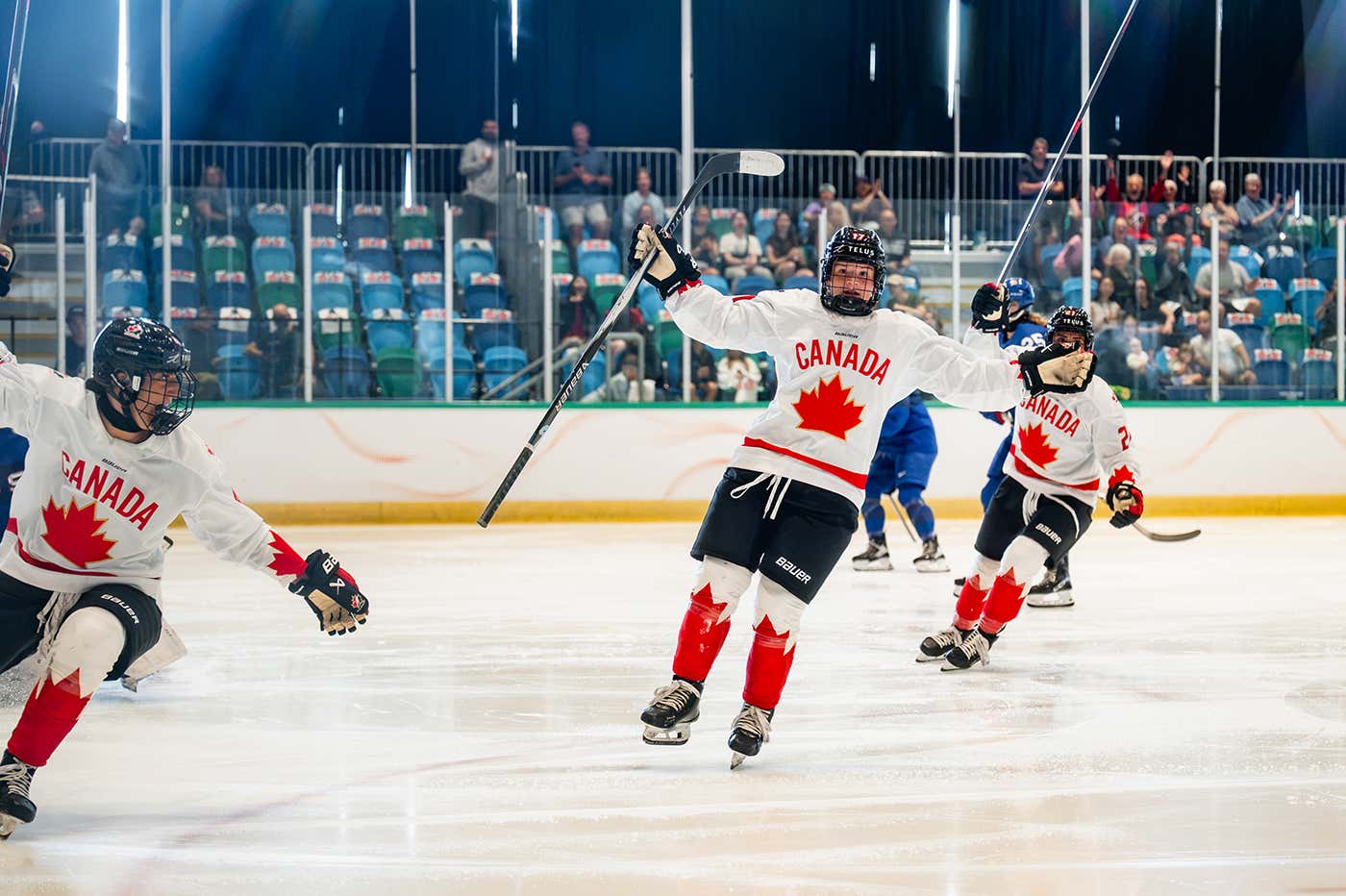
2026-27 NWDT: CAN 2 – USA 1 SO (Game 2)
- <
- >
